









AI operators based on OpenClaw
Most office work involves repetitive actions rather than decisions: transferring data, filling out forms, updating CRM systems, and collecting information from various sources. These processes don't require thinking, yet they take up hours every day.
AI computer operators solve precisely this problem. These are intelligent agents that work within software interfaces just like humans: they see the screen, understand the task, and perform actions — quickly, without errors, and without human intervention.
OpenClaw-based AI operators are the new standard for automation
Next-generation AI operators are built on computer-use AI technology — an approach in which artificial intelligence interacts with interfaces just like humans: it sees the screen, understands what's happening, and executes actions in browsers and programs. At the core of these solutions, we use OpenClaw, a framework that enables the transformation of individual AI actions into stable, manageable business processes.
Unlike classic RPA systems like UiPath, where every step must be strictly defined and maintained, OpenClaw allows the AI operator to work flexibly. It's not tied to element coordinates and doesn't break with minor interface changes because it relies on meaning and visual context. OpenClaw manages the sequence of actions, monitors step execution, and makes operator behavior predictable even in complex scenarios.
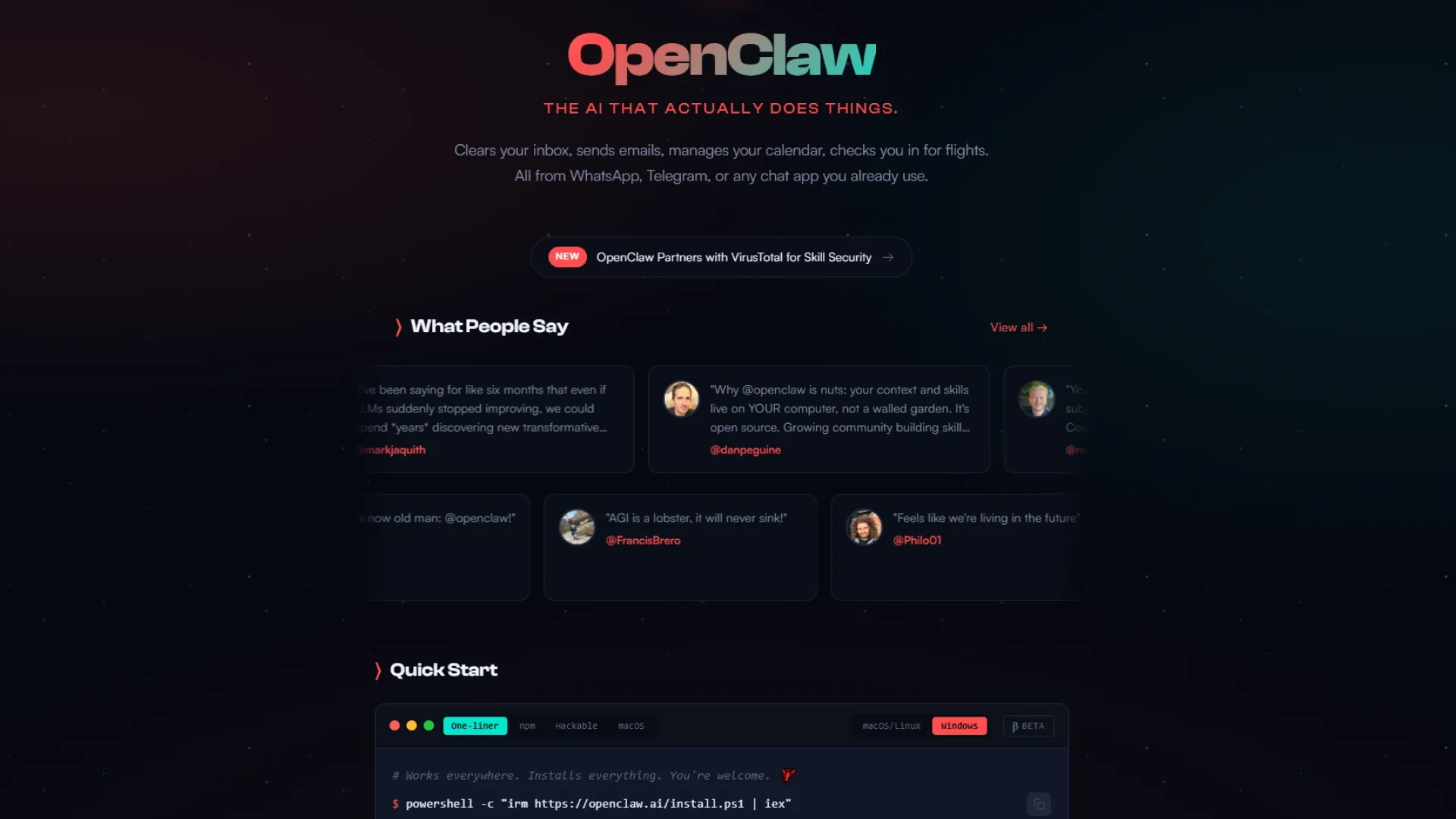
Compared to traditional AI agents that process text and data, OpenClaw takes AI to the next level — the level of action. Instead of simply analyzing or responding, an OpenClaw-based AI operator logs into systems, presses buttons, transfers data, and performs real tasks. It's no longer an "assistant" but a fully-fledged digital worker.
Interest in such solutions is rapidly growing because businesses need to automate processes immediately, without the need for lengthy integration development. This is where OpenClaw becomes a key element: it allows AI operators to run on top of existing systems, even if they lack an API, and quickly scale automation without rewriting the infrastructure.
This approach has only recently become technologically feasible. Modern LLMs have learned to understand interfaces and task contexts, but without a control layer, they are unable to reliably execute processes. OpenClaw bridges this gap: it coordinates AI actions, manages execution logic, and ensures reliable operator performance in a real-world digital environment.
As a result, OpenClaw enables businesses to transition from classic automation to a new model—one where tasks are performed not by a script, but by a digital employee capable of working with any interface, adapting to changes, and performing processes 24/7.
What is an AI computer operator?
An AI computer operator is a type of AI agent that specializes in interacting with software interfaces and web services. Unlike a chatbot, which answers questions, an AI Digital Worker performs actions: pressing buttons, filling in fields, reading data from a screen, and transferring information between systems.
The operating principle is simple: the operator receives a task in the form of instructions, analyzes the interface of the required service or website, sequentially performs the steps to solve it, and saves the result in the desired location - CRM, a table, or a database.
These systems operate in browsers, desktop applications, and through API integrations. For businesses, this means that any process an employee performs manually in the program interface can be delegated to an AI operator.
In the industry, such solutions are also referred to as AI Digital Workers, AI Computer Operators, and Computer-Use AI — all terms that describe the same class of technologies.
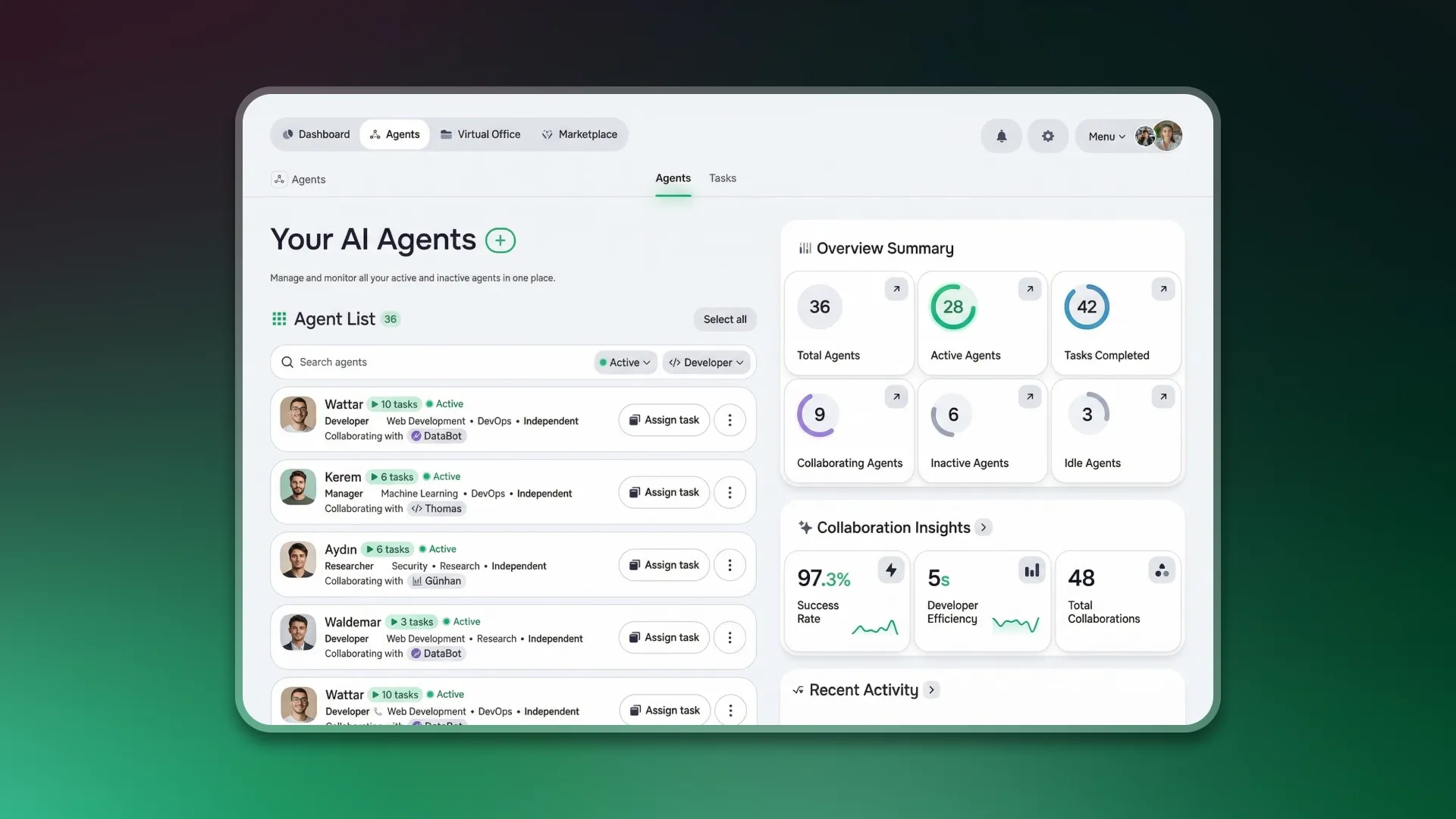
Practical scenarios for using AI operators
The easiest way to explain the technology is through specific tasks. Here are the scenarios we automate most often.
Case 1. Automatic collection of a customer base
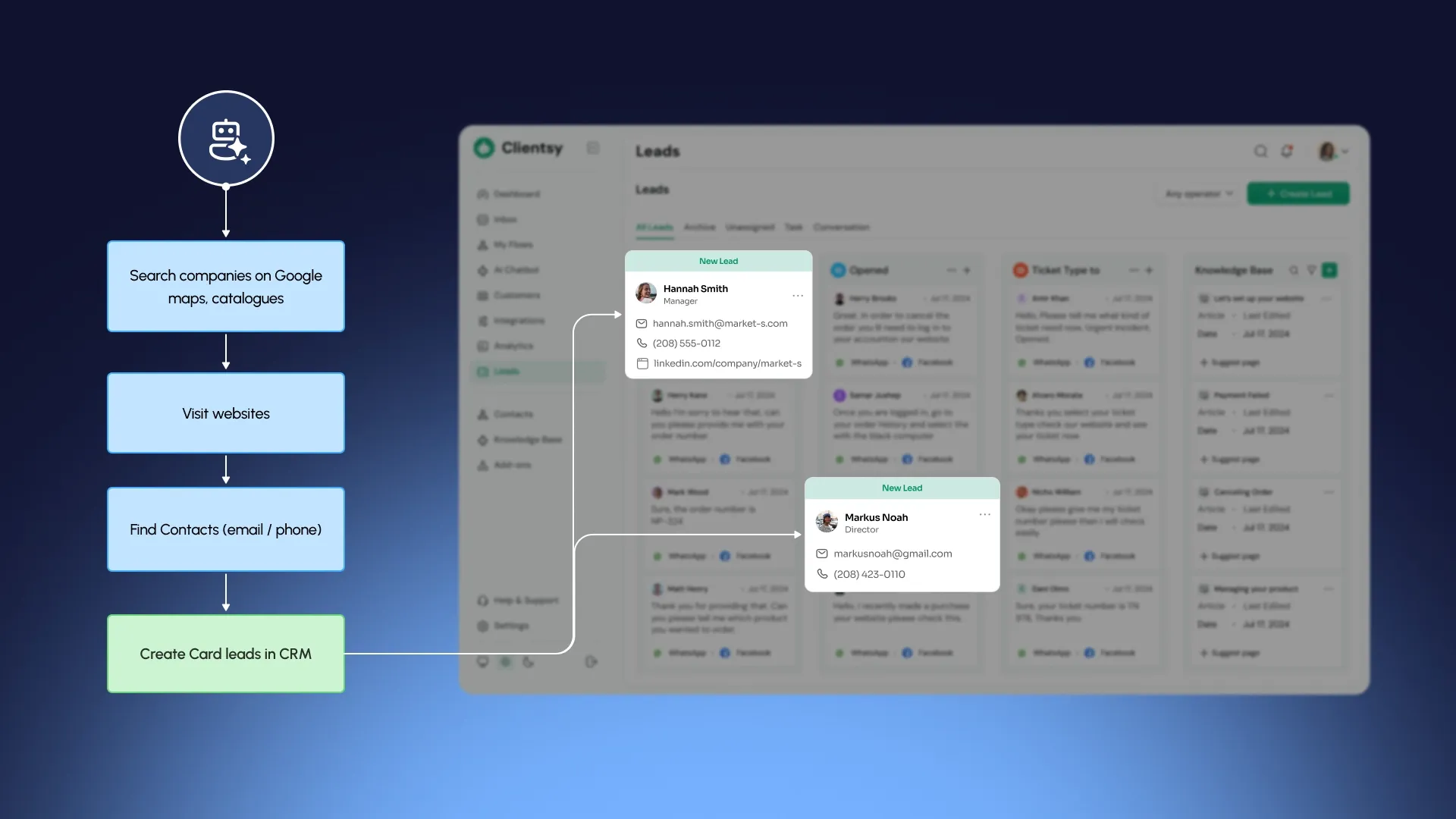
The sales department spends hours searching for potential clients' contacts. An AI operator performs this work in the background: searching for companies in Google Maps and specialized directories, visiting their websites, finding email addresses and phone numbers of contacts, and automatically creating CRM cards with pre-populated fields.
Result: managers receive a ready-made database and immediately begin selling — without manually searching and transferring data.
Case 2. Automatic CRM filling
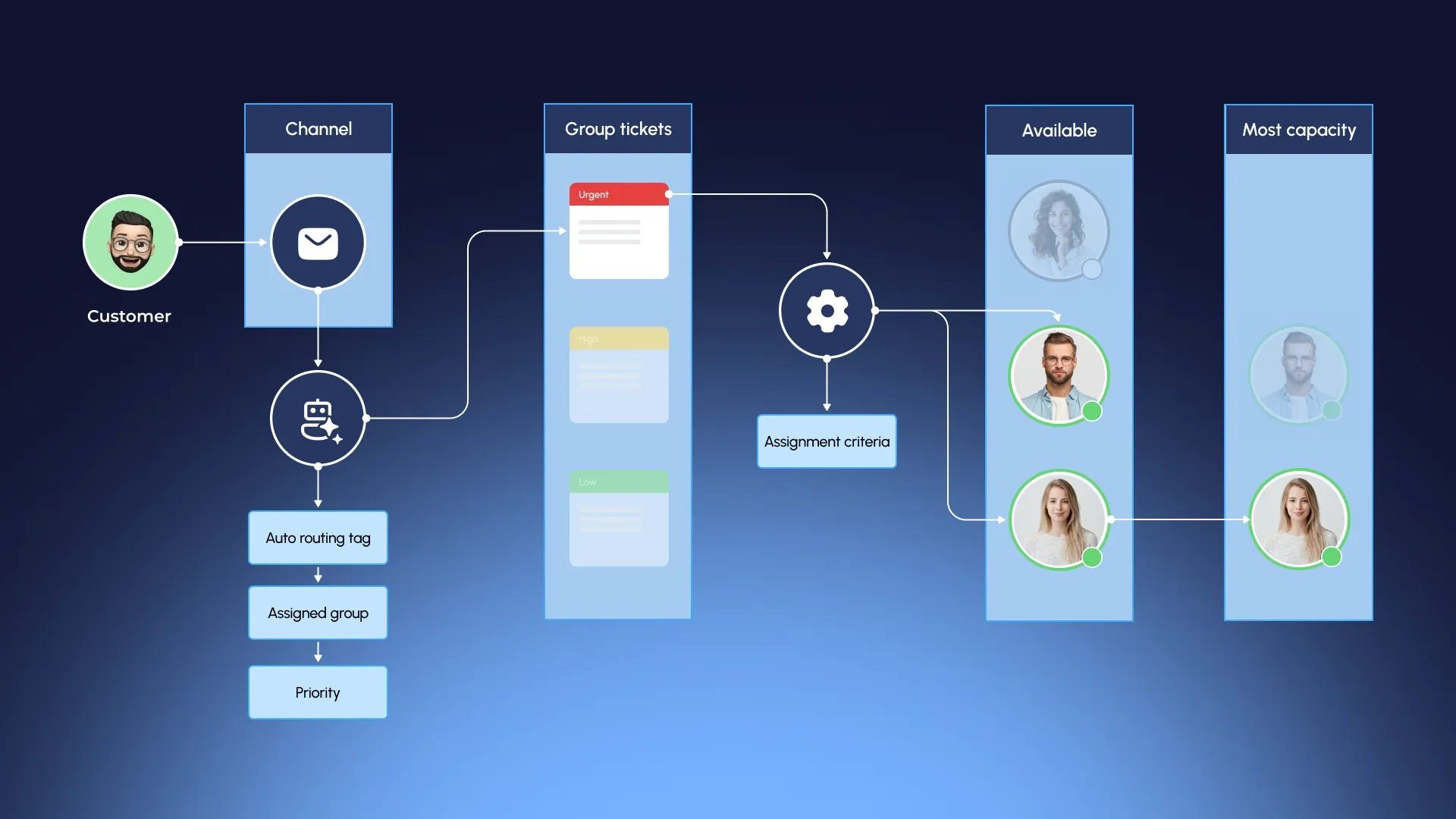
For each incoming request, an employee manually transfers the data from the form to the CRM. The AI operator takes care of this process: it reviews new requests, extracts customer data, creates a card in the CRM, populates the fields, and assigns the responsible manager.
Result: leads are instantly added to the CRM, without delays or errors during data transfer.
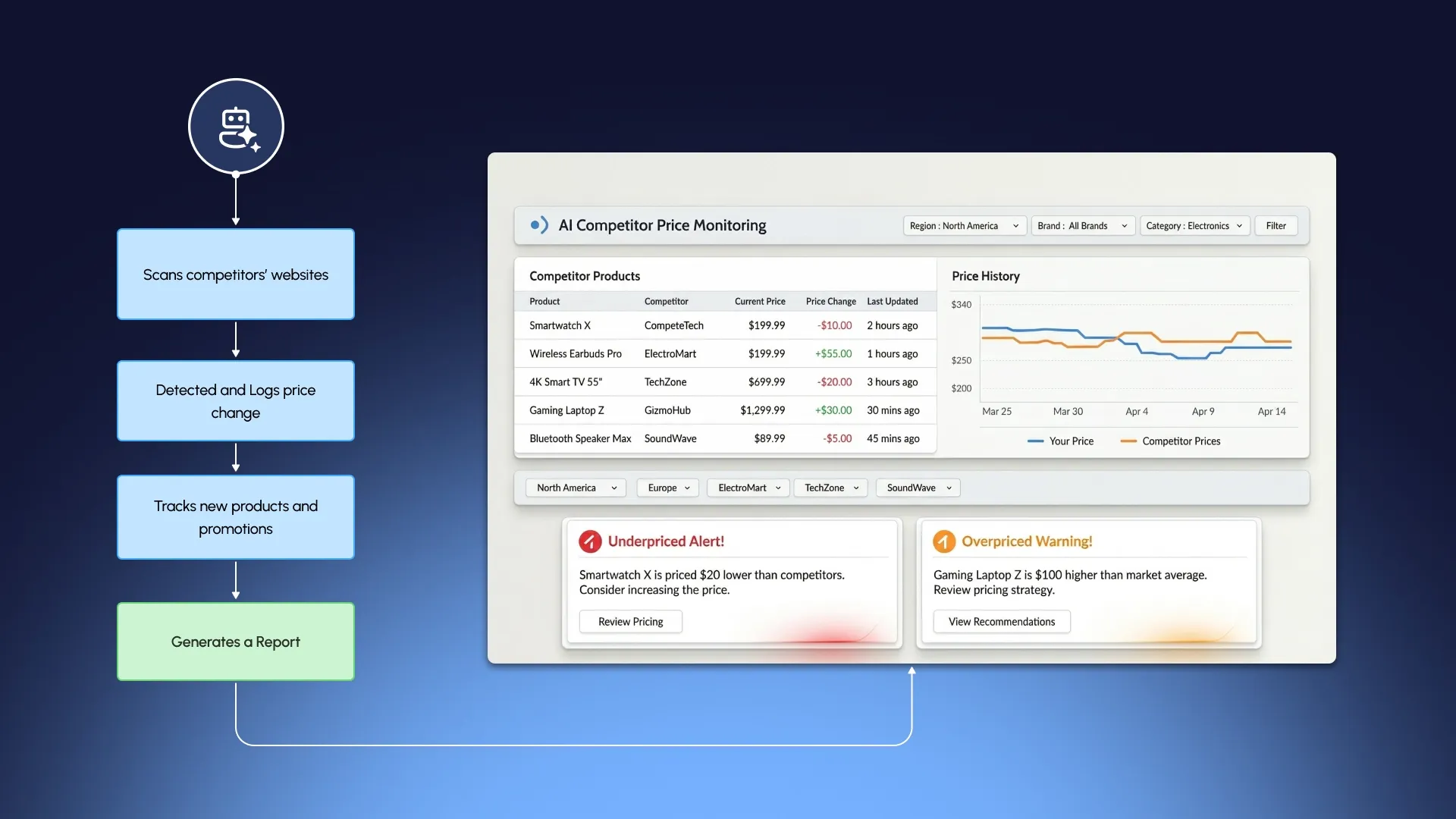
Case 3. Monitoring competitors' websites
Regular competitor monitoring requires time that marketers often lack. An AI operator routinely crawls competitors' websites, records price changes, tracks new products and promotions, and generates a report showing the dynamics of these changes.
The result: up-to-date market data without manual monitoring – the team receives a completed report at the appointed time.
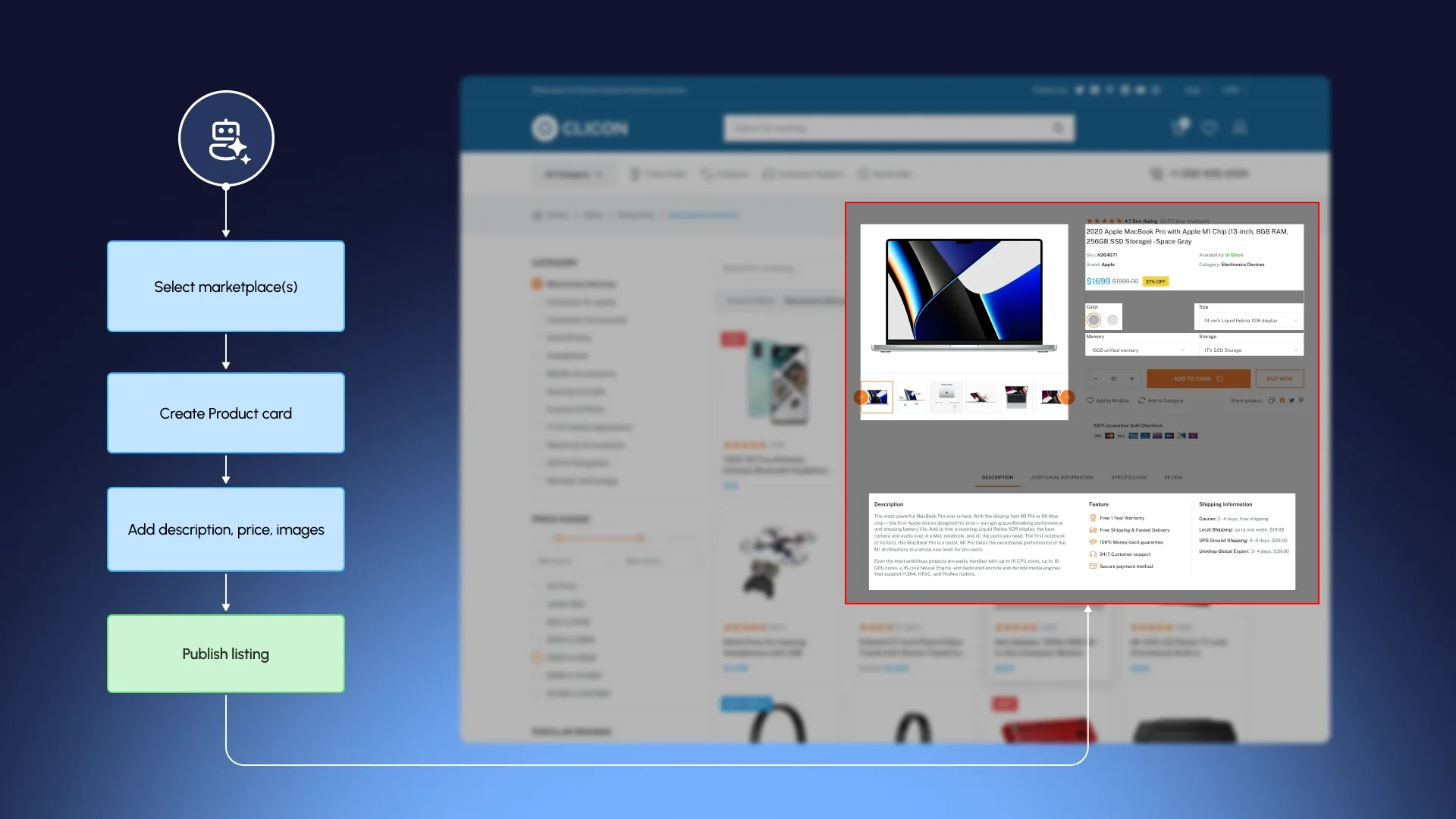
Case 4. Publishing products on marketplaces
Filling out product listings on platforms like eBay, Etsy, and Amazon is a tedious process that takes days for large catalogs. An AI operator uploads the items one by one: creating a listing, filling in the title, description, and specifications, setting the price, attaching images, and publishing the item.
Result: a catalog of hundreds of items is published in hours instead of weeks.
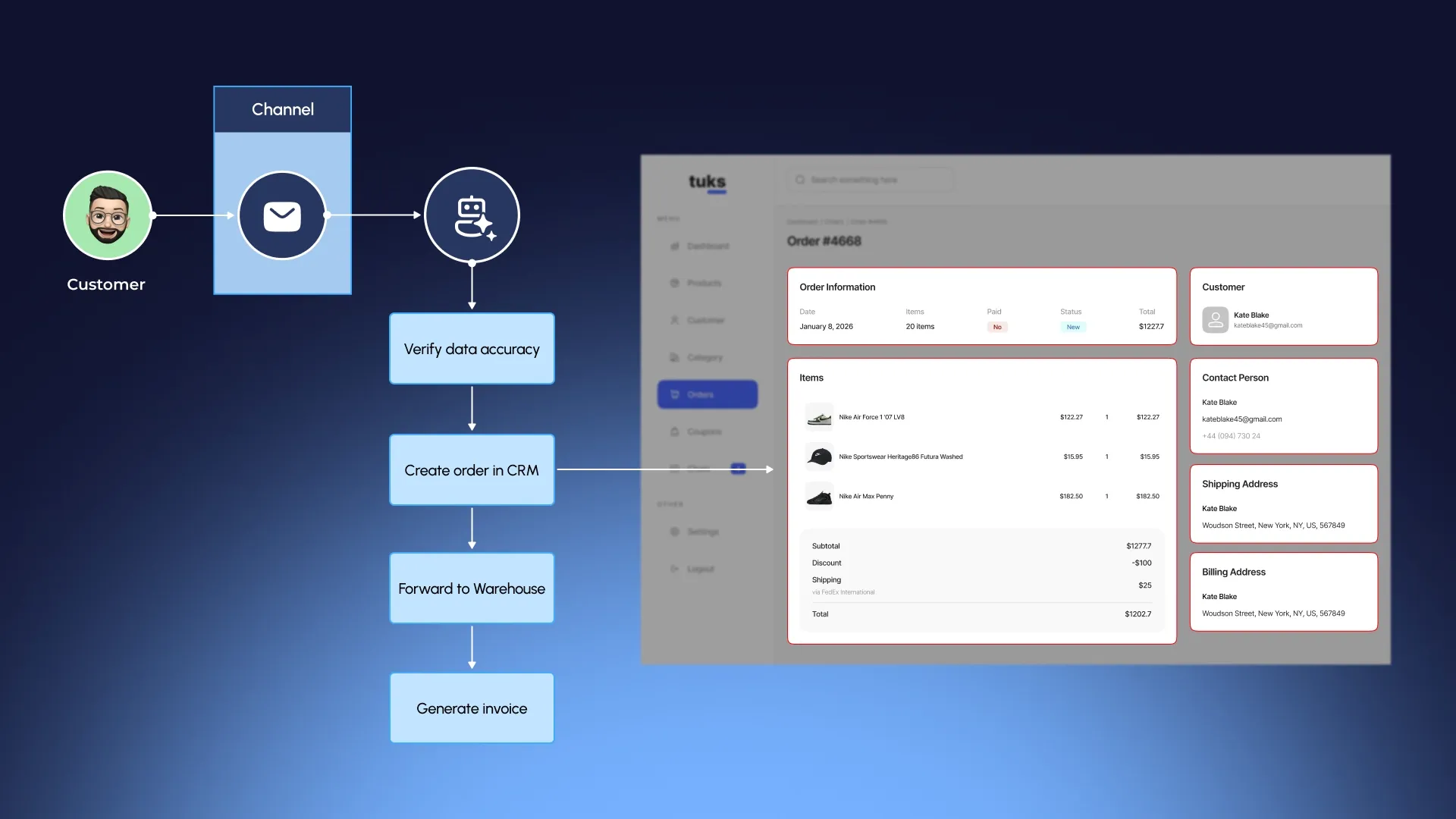
Case 5. Automation of order processing
Each order goes through several systems: a website form, CRM, warehouse, and accounting. The AI operator connects these systems without API integration: it accepts an order from email or a form, verifies the data, enters the order into the CRM, transmits the information to the warehouse, and records it in the accounting system.
Result: the entire order processing cycle is completed automatically, even between systems without direct integration.
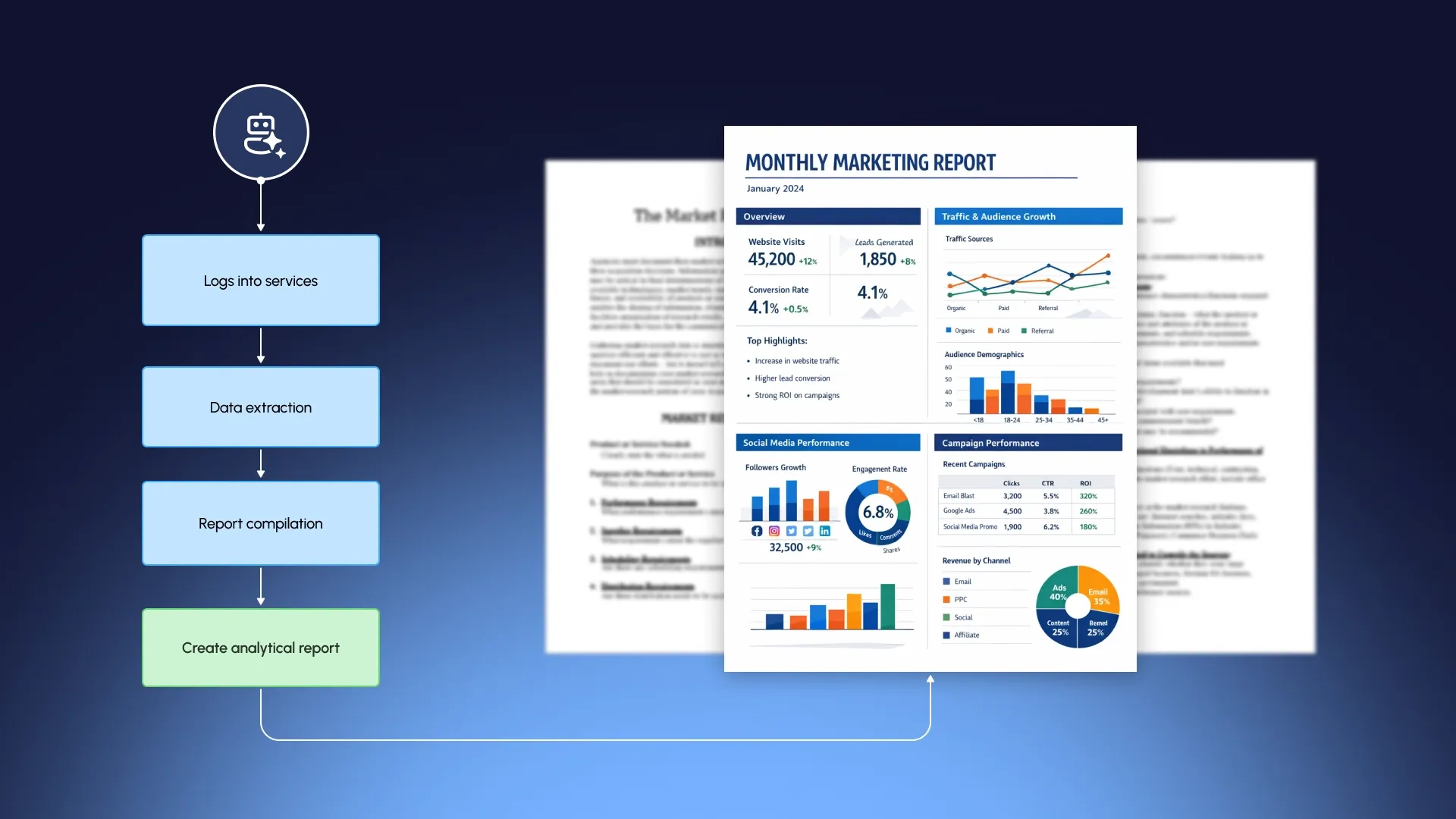
Case 6. Preparation of analytical reports
Monthly reports are compiled from ten different sources: advertising accounts, CRM, Google Analytics, and spreadsheets. An AI operator logs into each service on a schedule, downloads the required data, and compiles it into a single report using a preset template.
Result: the report is ready at the beginning of each period without the analyst's involvement in data collection.
Case 7. Automating the work of the support service
Customer support agents spend time not only responding to customers but also searching for information in systems. An AI agent takes care of the routine work: checking the status of a request in the CRM or helpdesk, searching for relevant data in the knowledge base, and updating the status of the request after completing an action.
Result: operators are focused on customers rather than searching for data in systems.
Case 8. Automation of marketing tasks
Posting on social media, updating ads, and transferring data between advertising accounts are tasks that are repeated regularly and take up a significant amount of time. The AI operator publishes and updates ads using a template, transfers audience data between platforms, and records changes in reporting tables.
The result: marketers focus on strategy rather than operational tasks.

When does a business need AI operators?
Automating a business through computer operators is especially effective in four situations.
- Employees perform many repetitive actions in software interfaces. If a task is repeated more than 10 times a day and follows the same algorithm, it can be automated.
- Large volumes of data need to be handled. Transferring hundreds of records, checking thousands of positions, collecting data from dozens of sources — all tasks that an AI operator can handle faster and more accurately than a human.
- The systems aren't directly integrated. When there's no ready-made API connector between CRM, ERP, and other tools, the AI operator works through the interface — like a human worker, but without the fatigue.
- 24/7 work is required. The AI operator never goes home or takes days off – tasks are performed at any time according to a schedule or trigger.
How we develop AI operators
The development of an AI agent for business process automation goes through four stages.
- Business process analysis. We determine which tasks are suitable for automation, study current employee workflows, and evaluate system interfaces and transaction volumes. At this stage, the technical specifications for operator development are developed.
- AI solution design. We create the AI agent architecture: we describe the operating logic, exception handling scenarios, interface interaction methods, and result storage formats.
- System integration. We connect the operator to the necessary systems: CRM, ERP, external service APIs, and internal databases. We configure authorization, access rights, and launch schedules.
- Testing and launch . We test the AI operator's performance in real-world scenarios, including non-standard situations. After successful testing, we launch the solution into production and hand over the operator management guidelines to the team.
OpenClaw Technology as the Foundation of AI Operators
Modern AI operators are built not just on a set of technologies, but on a managed architecture, where OpenClaw plays a key role — a framework that transforms AI capabilities into stable and repeatable business processes.
OpenClaw serves as the central control layer of the AI operator. It ensures that the agent not only "knows how" to perform actions, but also performs them consistently, predictably, and reliably in the real world. Without this layer, even the most powerful LLM models and AI agents remain at the level of individual actions but are unable to execute full-fledged workflows.
The entire technology stack is built around OpenClaw. LLM models provide task understanding and interface interpretation. Computer-use AI allows the agent to "see" the screen and navigate interfaces like a human. Browser automation tools enable browser control and interaction with web services. API integrations are used where direct and reliable connections to systems are required.
However, it is OpenClaw that connects all these components into a single system. When an AI operator receives a task, it's not enough to simply determine what to do. It must open the appropriate interface, wait for it to load, find the elements, perform the actions, check the results, and correctly proceed to the next step. OpenClaw manages this chain: it coordinates the agent's actions, controls transitions between stages, and handles intermediate states.
As a result, an OpenClaw-based AI operator is not a collection of disparate technologies, but a holistic system capable of executing complex business processes in real interfaces, adapting to changes, and operating reliably in production.

Benefits of AI Operators for Business
- Freeing employees from routine tasks. Routine tasks are delegated to the AI operator. Employees can focus on work that requires judgment, communication, and expertise.
- Reduced operational costs. A single AI operator performs the work of several employees without the additional costs of hiring, training, and management.
- High speed and accuracy. AI automation performs tasks several times faster than humans and eliminates errors typical of manual labor, such as typos, omissions, and accidental duplicates.
- More tasks without expanding your team. A single AI operator can handle thousands of operations in parallel. As the volume of tasks grows, there's no need to hire new employees — simply expand the operator's configuration.
- 24/7 operation based on a schedule or trigger. AI operators are launched at a specified time, upon receipt of a new event, or continuously, depending on process requirements.
Order the development of an AI operator for your business
We develop AI operators based on OpenClaw, an approach that is gradually replacing classic RPA systems and becoming the new automation standard.
To create effective AI operators based on OpenClaw, we analyze your processes, design a solution, and deploy it to production. The result is a digital worker who performs routine operations in your systems without team involvement.
Describe the task, and we'll show you how an OpenClaw-based AI operator can replace manual processes and calculate the economics.


FAQ
-
How is an AI operator different from a chatbot?
A chatbot interacts with users in a conversational mode, answering questions and accepting requests. An AI computer operator performs actions within program interfaces: opening websites, clicking buttons, filling out forms, and transferring data. These are different classes of AI agents with different tasks.
-
Do we need to change anything in our systems before implementation?
No. The AI operator interacts with the software interfaces the same way a human does— through a browser or desktop app. No special integration is required, although where an API is available, we use it for reliability.
-
Is it possible to automate employee office tasks?
Most routine office operations – yes. AI operators are good at tasks that follow a clear algorithm: collecting data, entering it into the system, filling out a form, generating a document. Tasks that require judgment, negotiation, or creativity are left to human workers.
-
How long does it take to develop an AI operator?
The timeframe depends on the complexity of the process and the number of systems the operator is working with. Simple scenarios are implemented in 3-4 weeks. Multi-stage processes with multiple integrations take 1-3 months.
-
What happens if the website or program interface has changed?
Computer-based AI operators perceive the interface visually and adapt to minor changes. Significant interface changes may require a configuration update — this is a standard part of solution support.