











 630
630
When businesses begin exploring artificial intelligence, one of the first questions is, "What exactly do we need a bot, an agent, or an assistant?". These terms are often confused, but they represent fundamentally different tools with distinct purposes. In this article, we'll clarify the differences between them and which tool is right for your business.

Front Office and Back Office
The easiest way to understand the difference is to draw a line between where the work takes place. At CortexIntellect, we divide them like this:
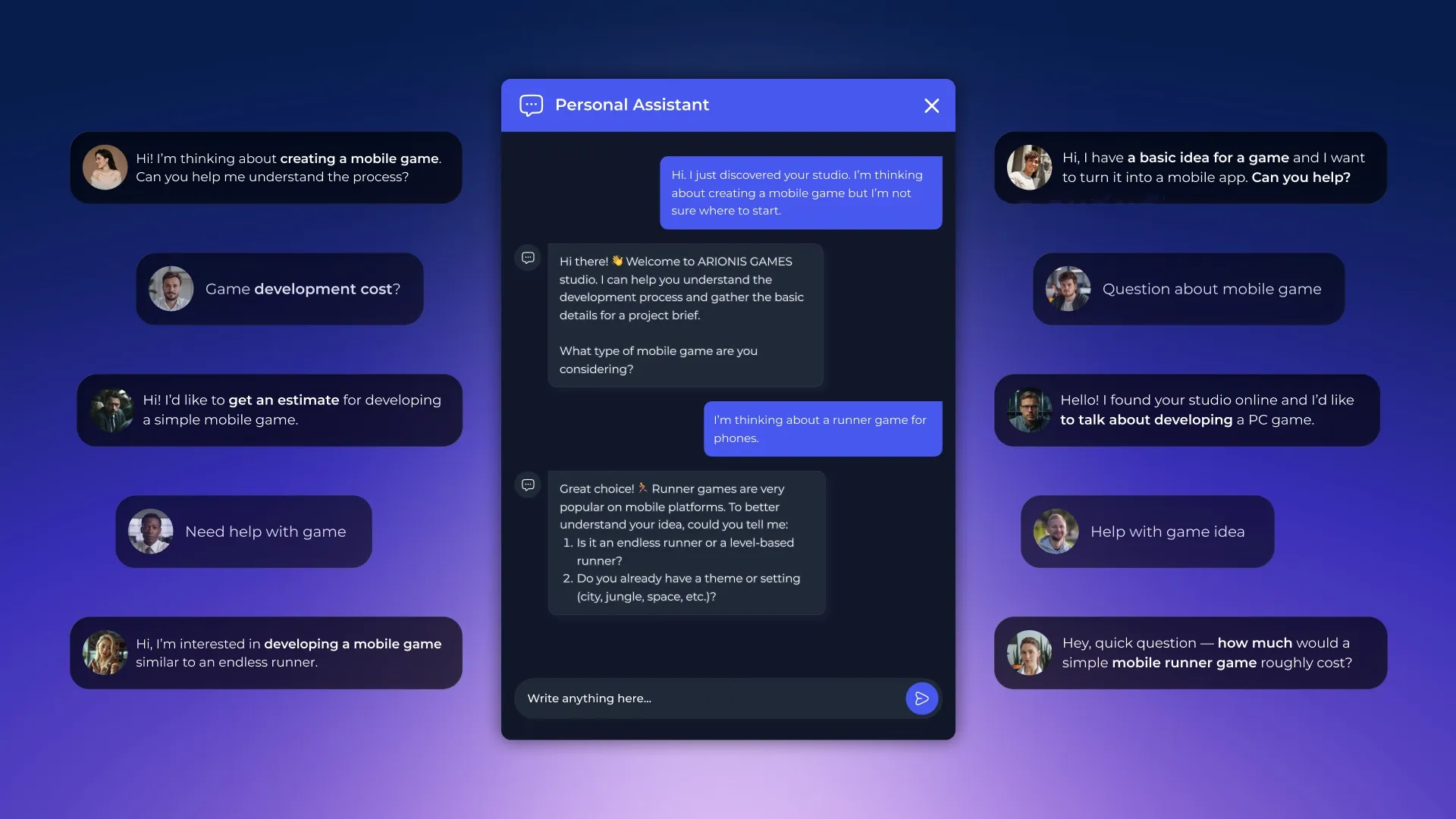
Assistants are the Front Office. They interact with clients: answer questions, provide consultations, and collect requests. Anything related to incoming communications is their domain.
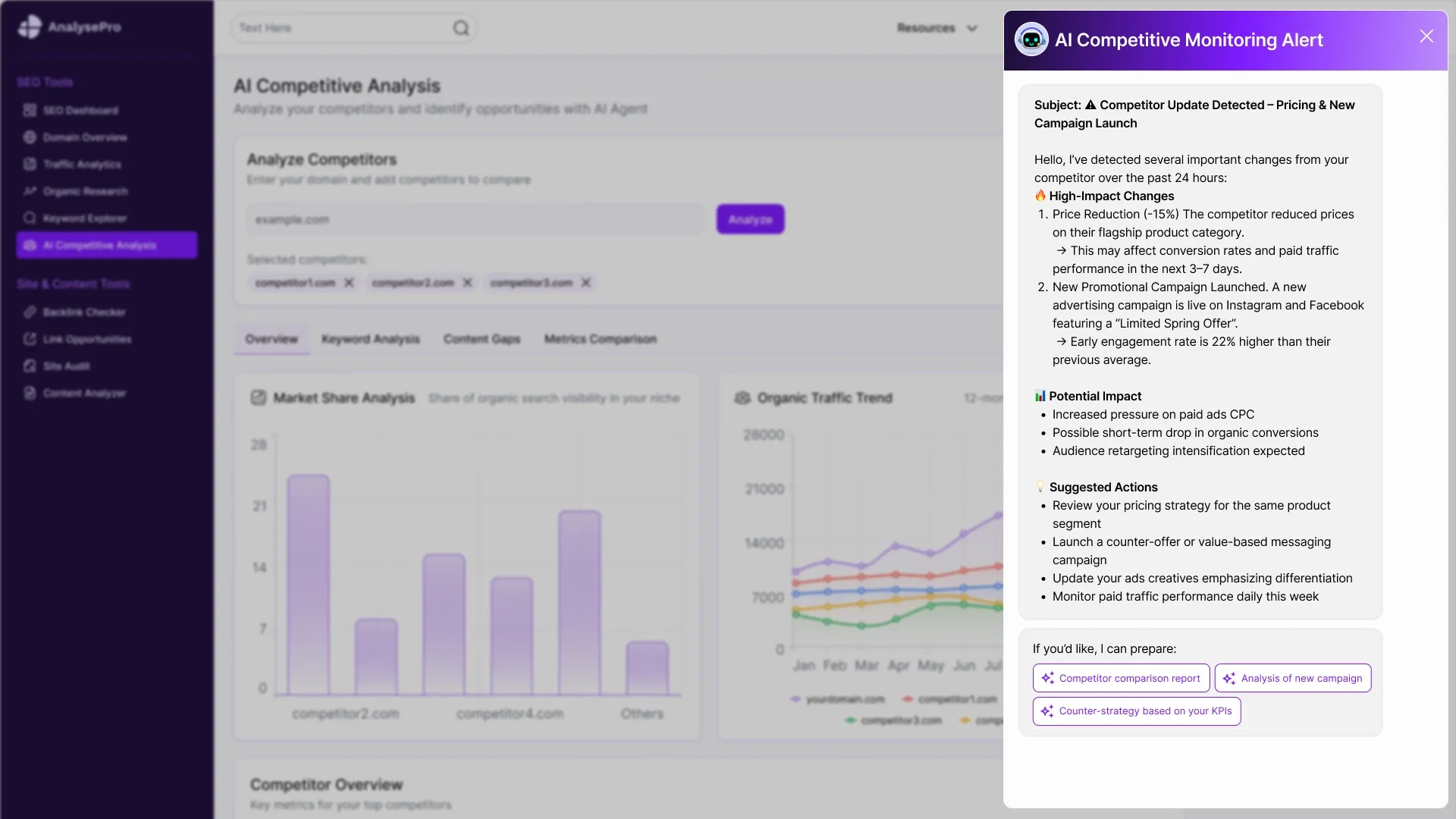
Agents are the Back Office. They work within the company: automating processes, processing data, and performing repetitive tasks. The client doesn't see them, but they feel the results.
Let's take a closer look at this using real instruments from our portfolio as an example.
AI assistants
An AI assistant is an intelligent tool for customer interaction. It answers questions, helps navigate products and services, reduces the workload of managers, and prevents leads from getting bored while waiting for a response.
Voice consultant AI assistant for your website
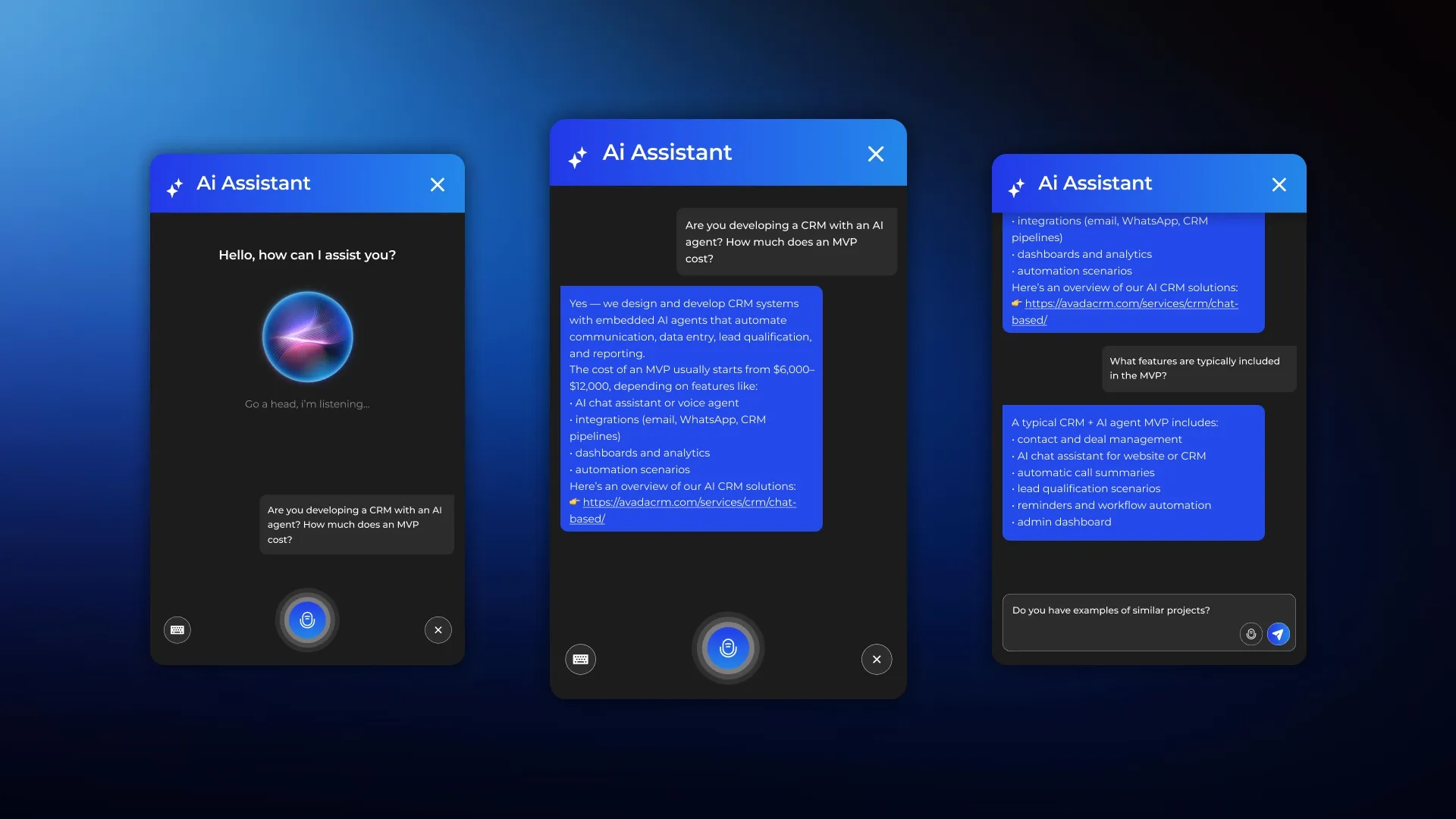
A consultant widget that acts as a pre-sales manager right on your website. The visitor asks a question via voice or text the assistant understands the intent and takes action:
- talks about the company's services
- helps you choose the right solution (need a bot, CRM, or custom development?)
- asks 3-5 clarifying questions and compiles a structured brief
- When there is enough data, it transfers the contact and briefing to the CRM or Telegram manager
It's powered by ElevenLabs for natural voice, OpenAI for dialogue logic, and the company's own knowledge base via RAG.
AI audio assistant page
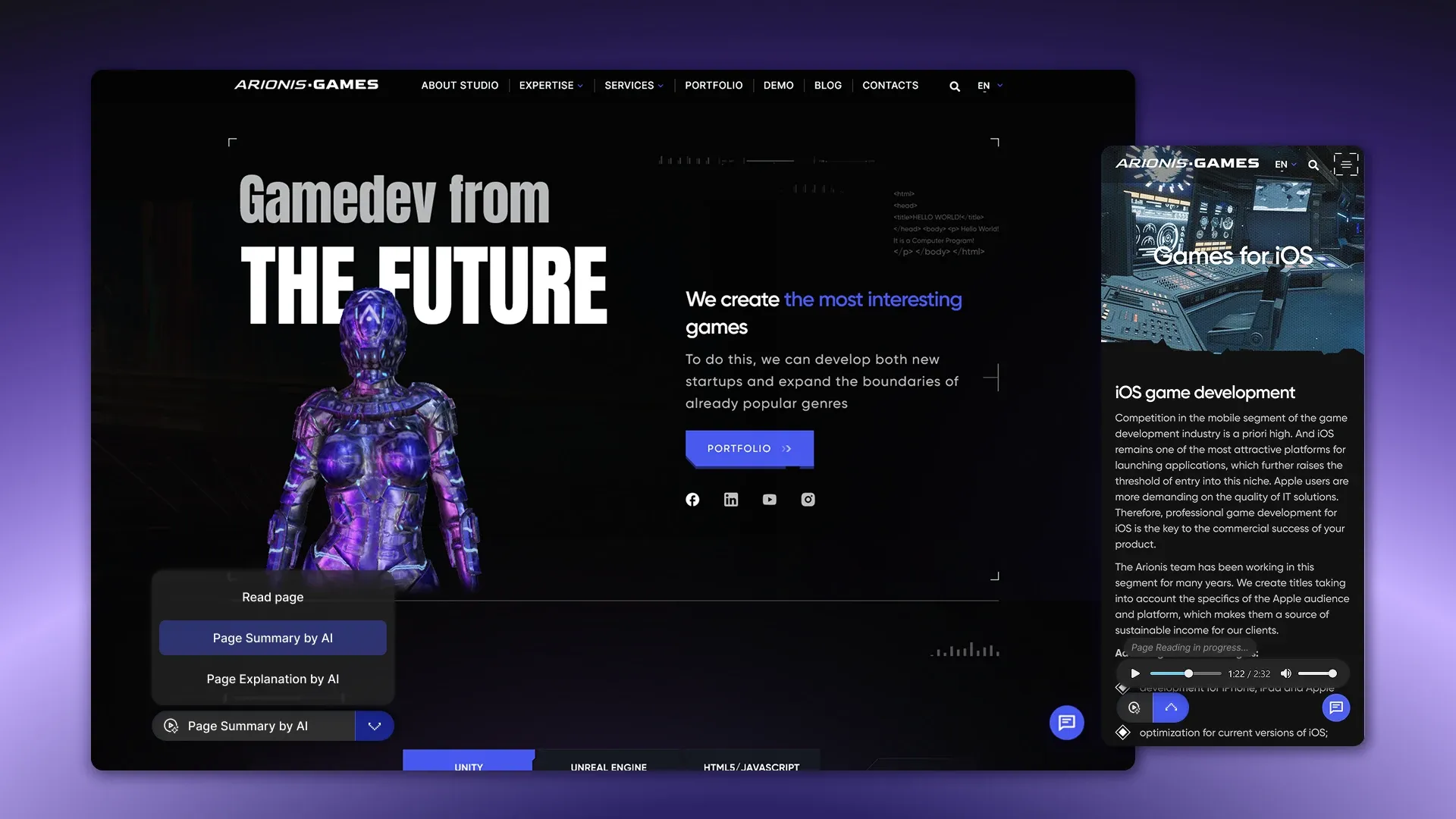
A compact widget on a website page that changes the way users consume content. It works in three modes:
- fully voices the page
- generates an AI summary with key points
- explains complex material in simple language
The mini player supports speed control, playback progress, and text transcription alongside the audio.
AI assistant for generating ad descriptions
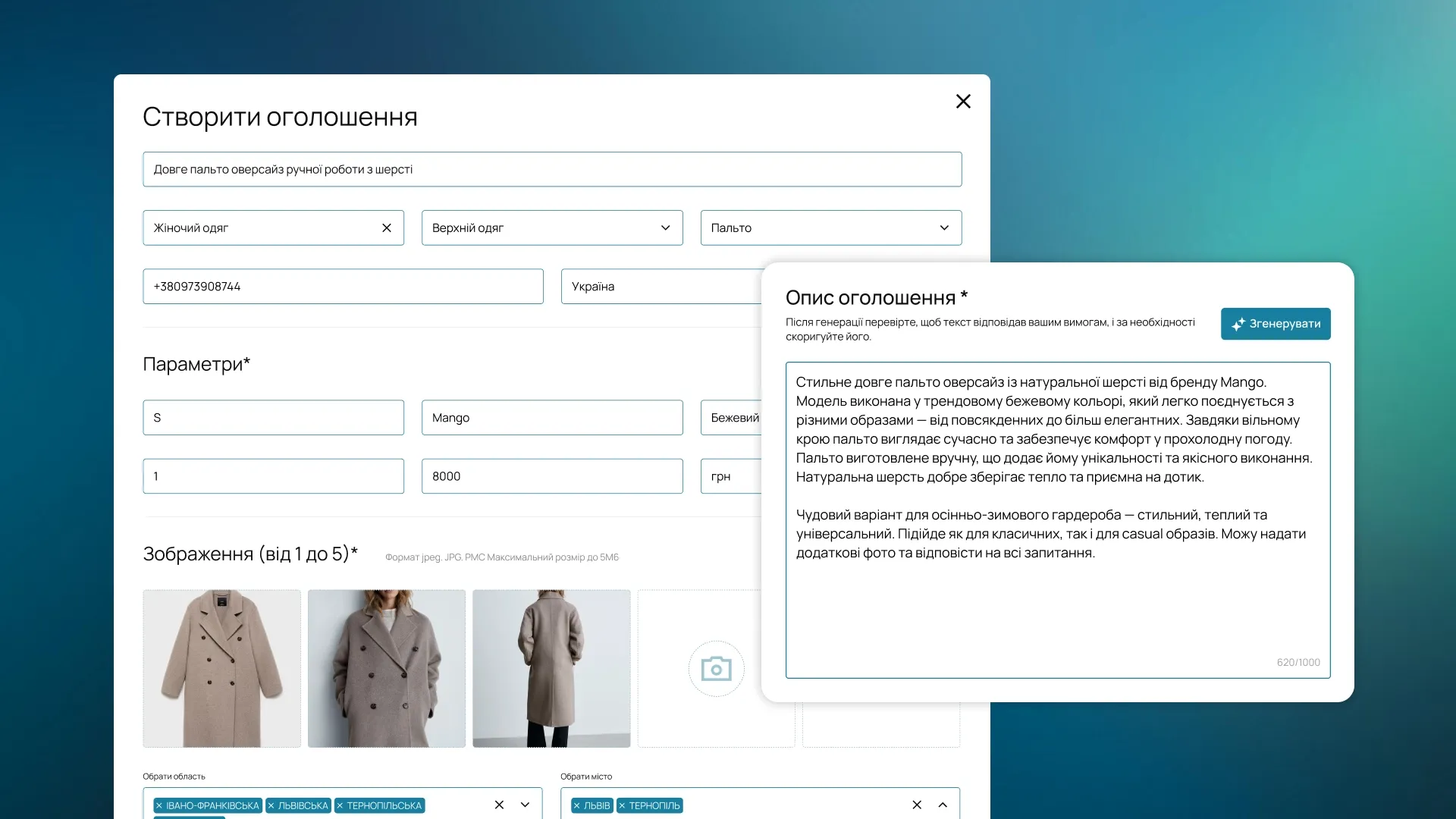
The seller fills out the listing form: title, category, condition, key features. They click one button, and the assistant generates a ready-made sales pitch. It:
- creates a structured description with an emphasis on benefits and a call to action
- adapts the text to the product category - electronics, clothing, furniture, cars, real estate, services
- supports different languages - detects automatically or by user selection
- allows you to accept text, edit it, or generate a new version
Ads that previously appeared with a blank field or a couple of lines now look professional and convert views into responses.
Briefing assistant
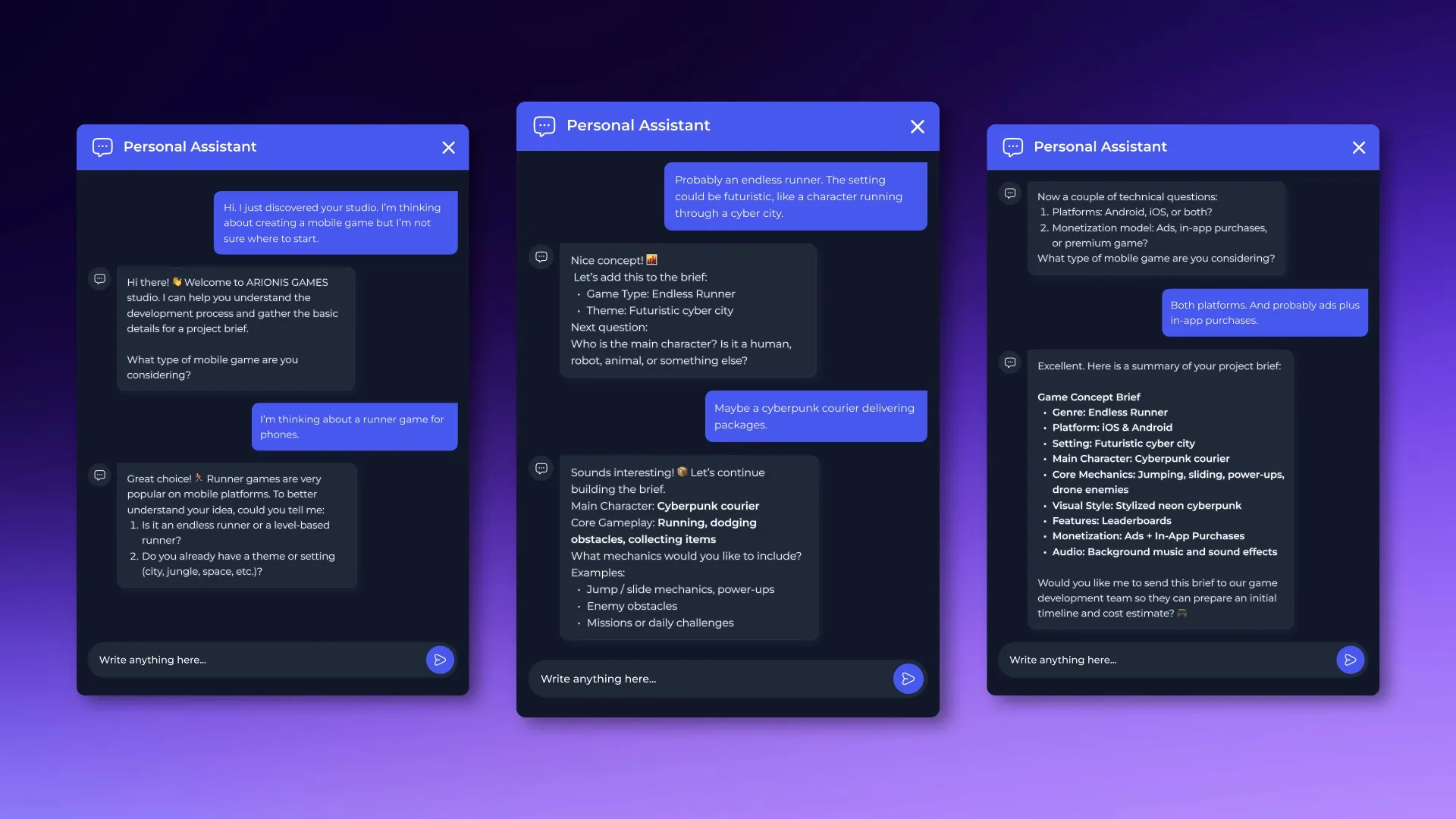
It works in tandem with other AI tools: an on-site assistant collects initial requirements in a conversation, asks clarifying questions, and generates a structured brief and the quote generation agent immediately uses this brief as input. The manager receives a prepared lead and a ready-made commercial proposal even before the first contact with the client.
AI agents
An AI agent is an autonomous agent within a company. It can collect data, create documents, analyze information, and launch processes. Where a human would spend hours, an agent accomplishes the task in minutes.
AI-based response generation agent for CRM
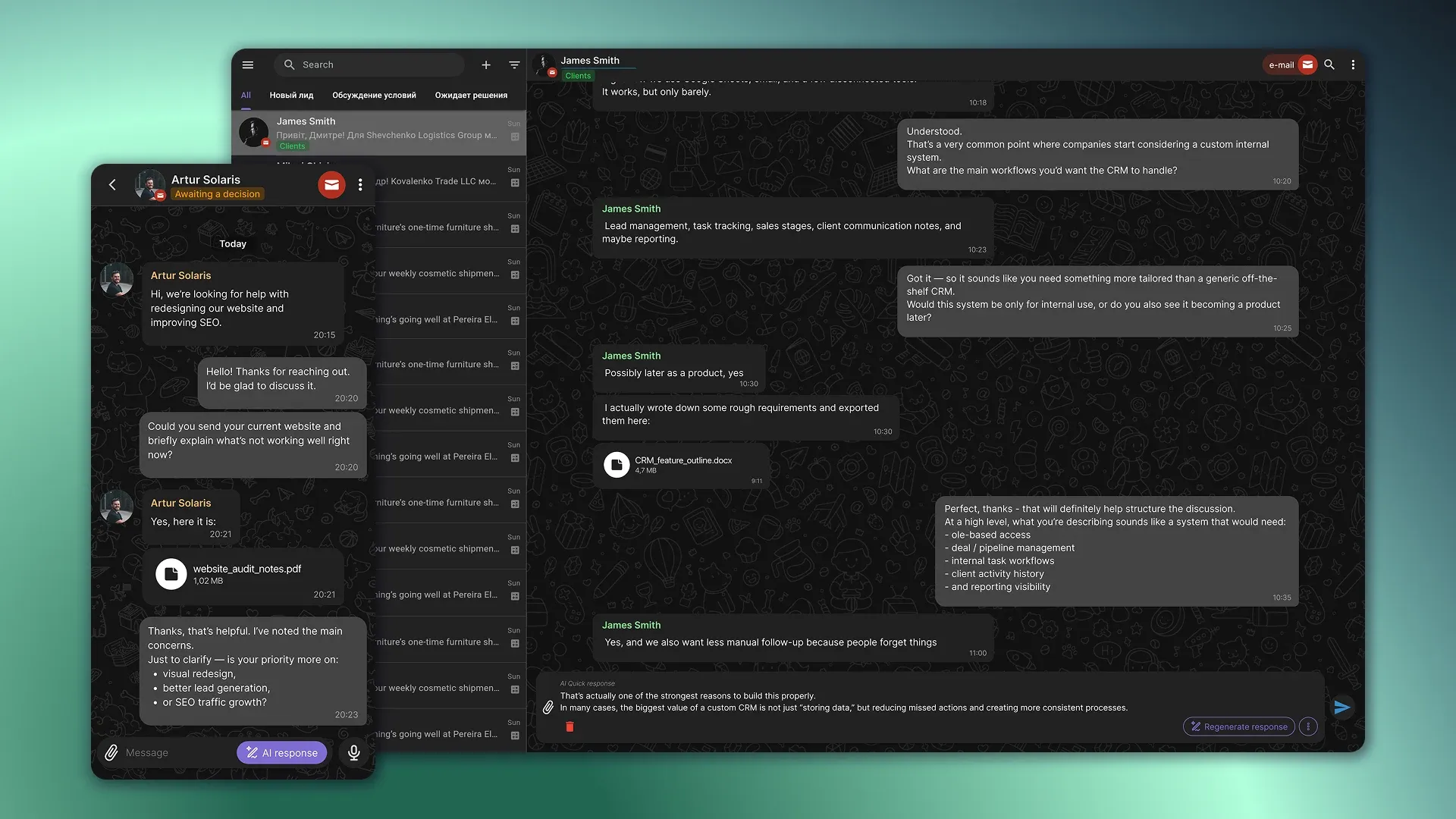
Work scenario:
- The manager receives a message in the CRM from Telegram, WhatsApp, web chat, or email and presses a single button.
- The system analyzes the entire correspondence history, customer data, and the company's communication style, then generates a ready-made response text directly in the input field.
- The manager decides whether to send, edit, or reject the message it never goes away automatically.
Responding to a query that previously required several minutes of word selection now takes seconds.
Voice agent in CRM
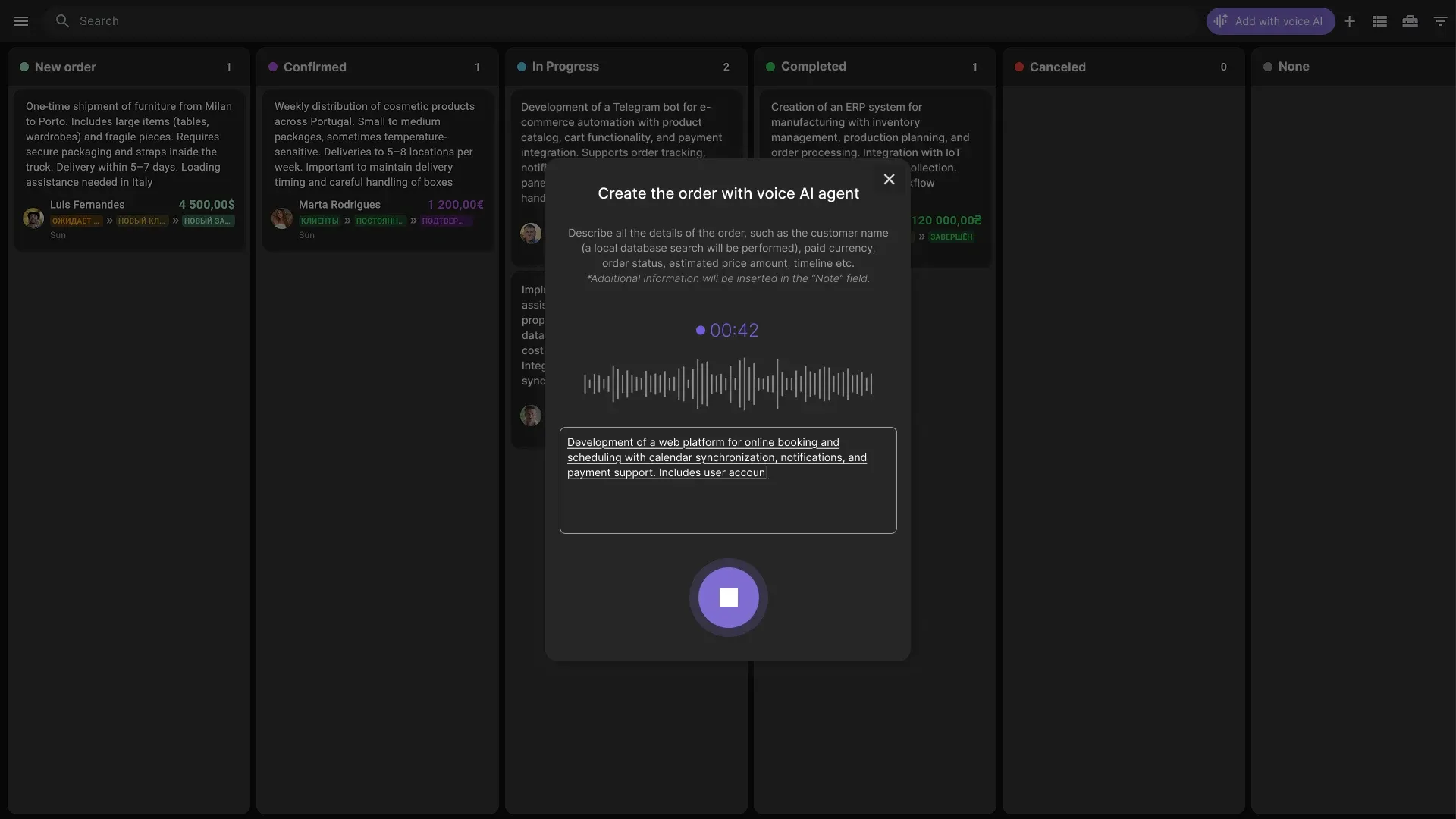
Push-to-talk voice input integrated directly into the website interface. The manager presses a button, speaks a command, and the system recognizes speech, cleans the text, removes filler words, and inserts the result into the appropriate field:
- chat with the client
- application card
- comment or draft of a letter
Three processing modes:
- basic transcription
- voice in structured text
- voice in a ready-made response to the client, taking into account the context of the correspondence
AI agent for generating CP
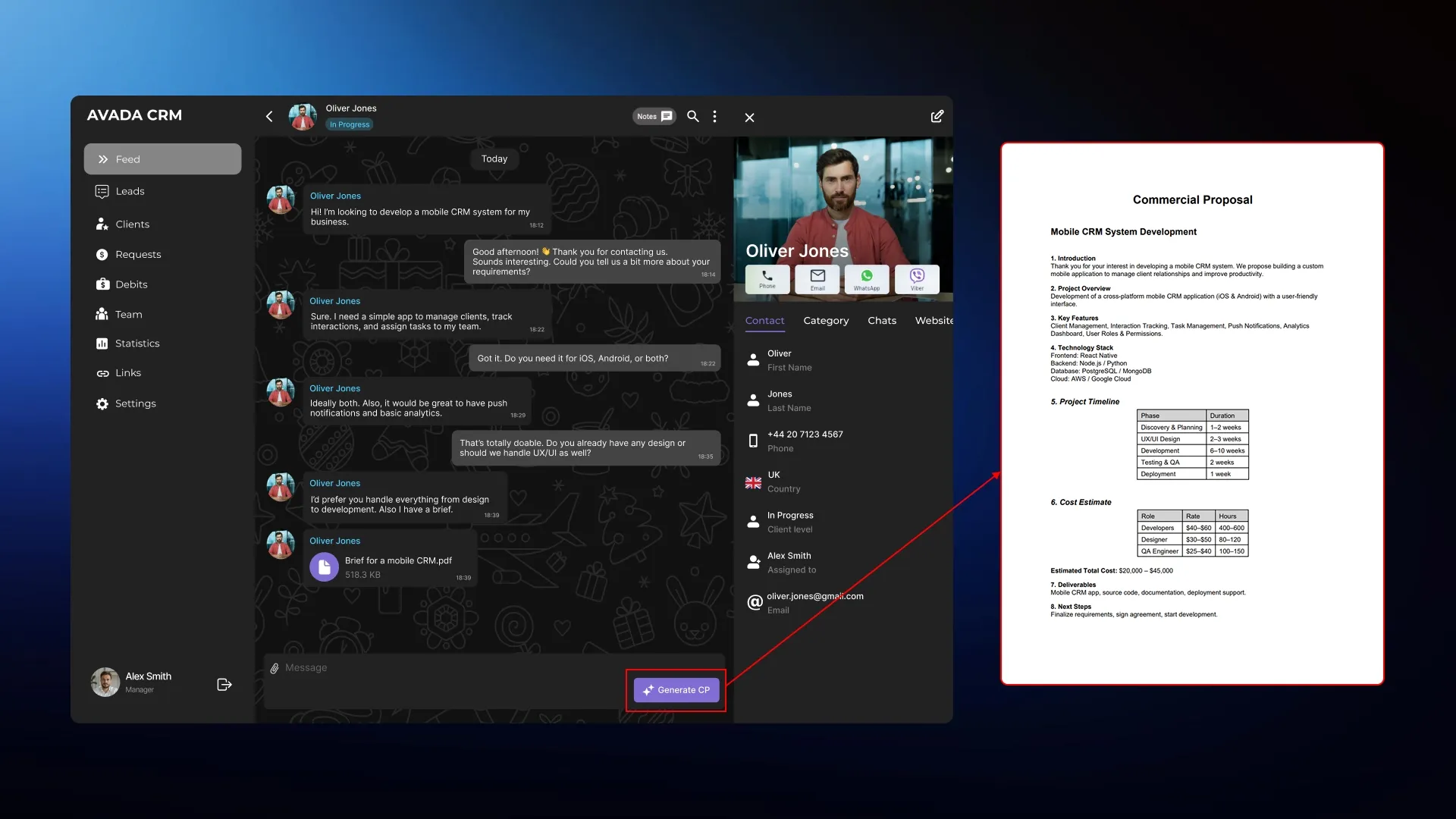
AI-based commercial proposal generation agent. The agent is integrated into AvadaCRM and can be launched with a single click directly from the client card. It analyzes:
- request and correspondence history
- completed brief
- internal price lists and company knowledge base
And generates a complete commercial proposal, which includes:
- project description and solution architecture
- stages of development
- timeline estimate and preliminary budget
Preparing a commercial proposal, which previously took 1 to 4 hours, now takes just minutes. The manager reviews, makes edits, and sends the final PDF directly from the CRM.
AI agent for analyzing telephone conversations
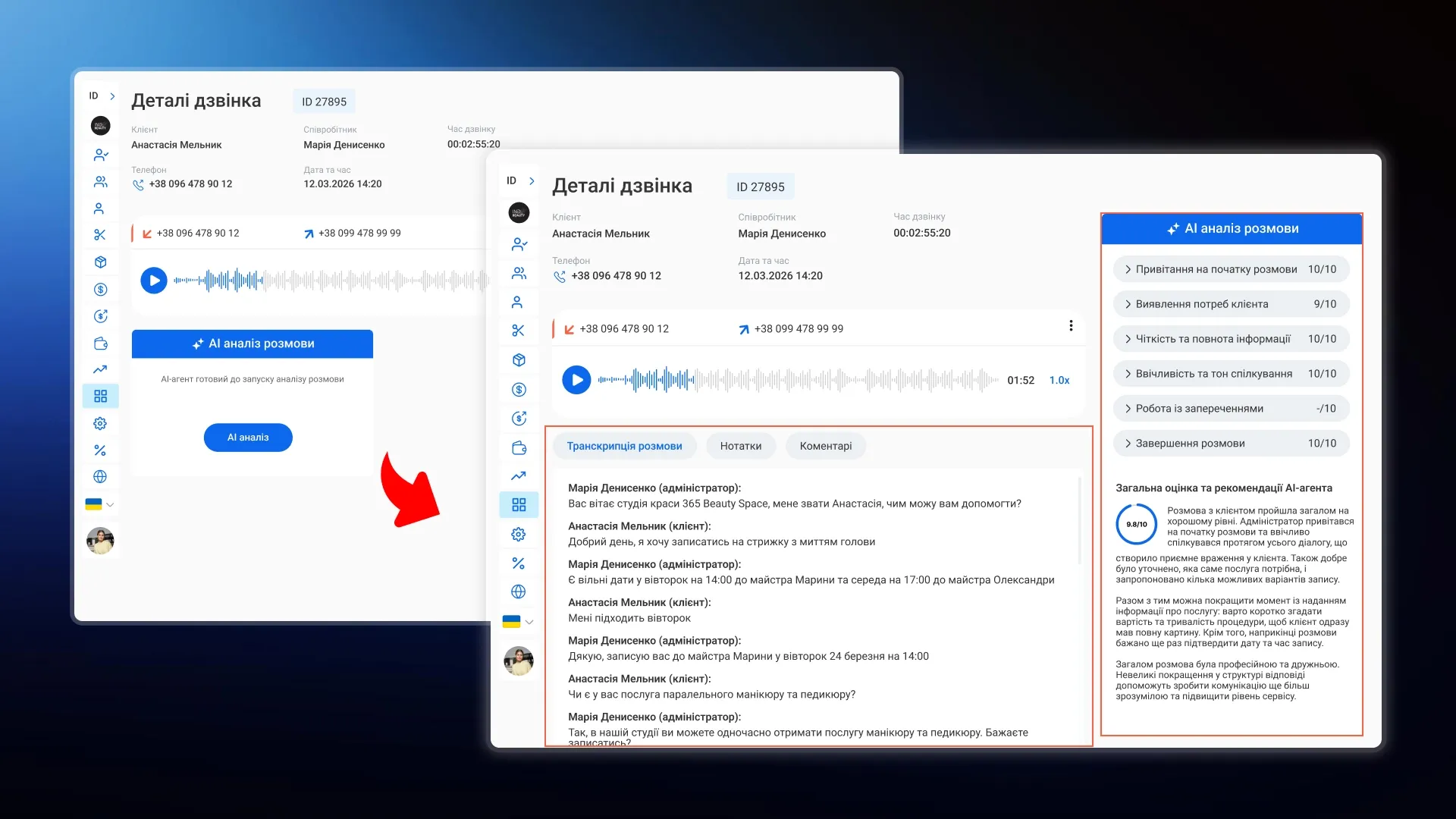
The agent is connected to IP telephony and integrated into the CRM. After the call ends, the audio recording is automatically saved to the call card the administrator can launch analysis with a single click. The agent then works independently:
- converts audio recordings into text transcriptions , separating the manager's and the client's lines
- analyzes the content of the dialogue - the topic of the message, the completeness of the responses, the logic of the conversation and compliance with communication standards
- evaluates the quality of the consultation based on key parameters: greeting, identifying needs, explaining the product, working with questions, ending the conversation
- creates a brief summary of the call - the purpose of the call, the main questions and the result
- provides recommendations for improving communication - specific, for each conversation
Every CRM license holder can edit the AI prompt and set their own analysis criteria to suit their business standards. Conversations that were previously overlooked due to time constraints are now analyzed systematically, giving managers a clear picture without manually reviewing recordings.
AI agent for analyzing commercial proposals from suppliers
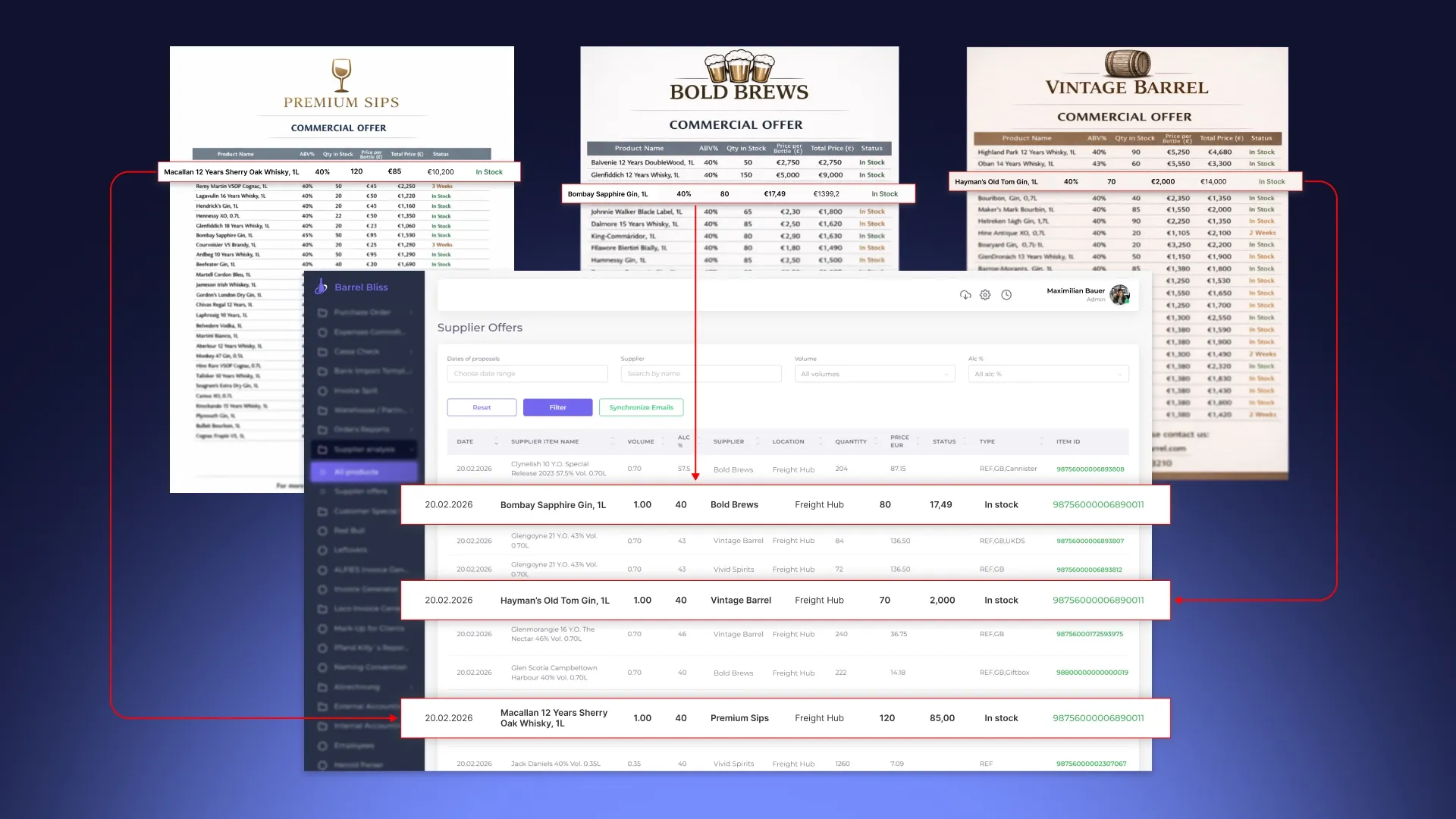
The company receives dozens of commercial proposals from suppliers—in emails, PDFs, Excel files, scans, and instant messaging. The agent is connected to email and instant messaging apps and works automatically:
- determines whether an incoming message is a commercial offer
- extracts data - product, price, conditions, sender
- compares items with the product database in the CRM
- generates a history of offers for each product and builds price dynamics graphs
If the comparison raises any doubts, the agent escalates the decision to a staff member. The purchasing department receives ready-made analytics: who offers the lowest prices, when it's most profitable to purchase, and how prices have changed over the period. Manual document review, which used to take hours, is now done without human intervention.
AI operators (Digital Workers)
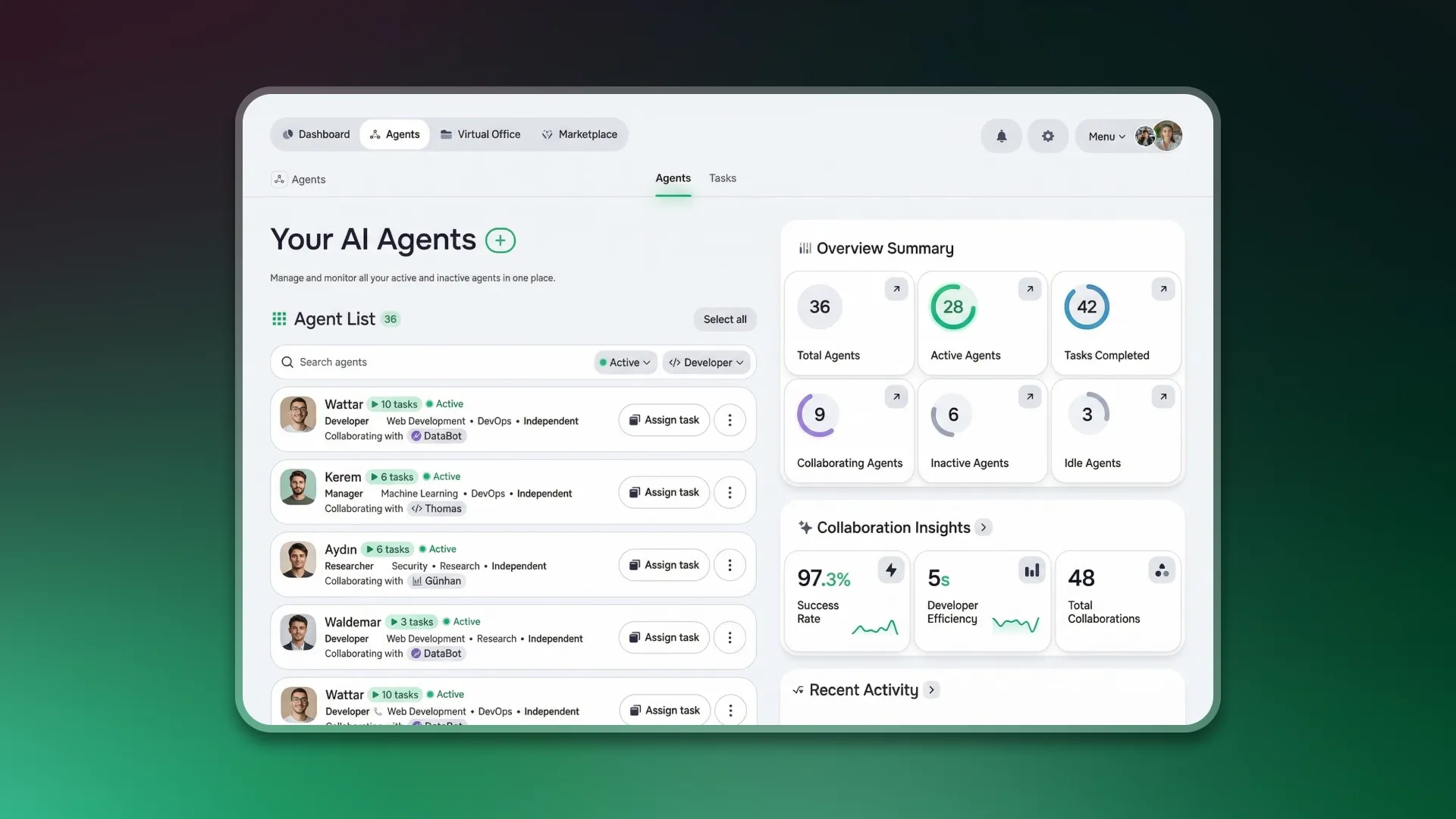
AI operators are digital employees who take on routine operational work that doesn't require creative solutions but takes up hours of the team's time each day. They can work within your systems CRM, spreadsheets, messaging apps, internal platforms and perform tasks just like a human would, only faster and without the risk of fatigue-related errors:
- are processing applications
- fill in the fields
- send notifications
- synchronize data between systems
They work without breaks, vacations, or errors due to fatigue and scale without hiring new people.
Comparison Chart: Assistant vs. Agent
| Criterion | AI assistant | AI agent |
|---|---|---|
| Where does it work? | More often than not, Front Office is working with the client. | Mostly Back Office, but can also work with the client |
| The main task | Mainly communicates, consults, helps | Mainly performs tasks and automates processes |
| Work format | More real-time dialogue | Mostly background processes, but dialogue is also possible |
| Who sees the result? | More often the client is direct | More often than not it's a command, but the result can be visible to the client |
| Target | Speed up communication and avoid losing leads | Reduce workload and automate processes |
| Effect | More leads, faster responses | Less routine, more productivity |
What to choose? Check out the checklist.
You need an AI assistant if:
☐ You have a lot of incoming messages from clients and managers are not able to respond in a timely manner
☐ Leads "cool down" while waiting for a response - and then leave
☐ Managers waste time on repetitive responses that could be automated
☐ There is no consultant on the site who works 24/7
☐ You want to collect applications and briefs without the involvement of a live employee
☐ Clients write in different languages, but managers only speak one
☐ Customers abandon their cart or leave the page because they didn't receive an answer when they were in doubt
You need an AI agent if:
☐ Employees spend hours on routine tasks: spreadsheets, copying data, reports
☐ Preparing a commercial proposal takes more than an hour
☐ After calls, information is lost because no one records the agreements
☐ There are repeatable processes that are performed manually - processing applications, data synchronization, notifications
☐ The team is growing, but the operational load is growing faster
☐ The CRM is filled out haphazardly the data is incomplete, duplicates, and fields are forgotten.
☐ Managers forget about follow-up tasks get lost between chats and emails
☐ The manager cannot see the real picture without manually collecting data from different systems
You need an assistant + agent combination if:
☐ You want to close the entire cycle - from the first contact with the client to the execution of internal tasks
☐ We need to scale without proportionally hiring new people
☐ It is important that data from the client dialogue automatically flows into internal processes - without manual transfer
Result
An AI assistant and an AI agent aren't competitors, but partners. One works with your clients, the other with your processes. Together, they cover the entire cycle: from the first customer interaction to the execution of internal tasks.
The goal is one - to reduce the workload on the team, automate routine tasks, and save time that can be invested in business growth.
Want to understand which solution is right for your business? Contact the CortexIntellect team — we'll analyze your situation and offer the best start.


