











 470
470
Modern CRM systems are gradually evolving from mere customer tracking tools into fully-fledged workspaces for communication, sales, and support. One of the most in-demand AI features today is an intelligent AI assistant for quick customer responses.
The essence of this feature is that managers no longer need to manually type long messages, search for links, correct errors, or waste time formatting text. Instead, the user presses the AI button, explains via voice or text what exactly the client needs to respond to, and the system automatically generates a ready-made message based on the context of the correspondence, the language spoken, and the specifics of the company's business.

How does an AI assistant work in CRM?
The function is extremely simple and intuitive. When a client sends a message to the CRM system, the manager opens a chat and activates AI mode.
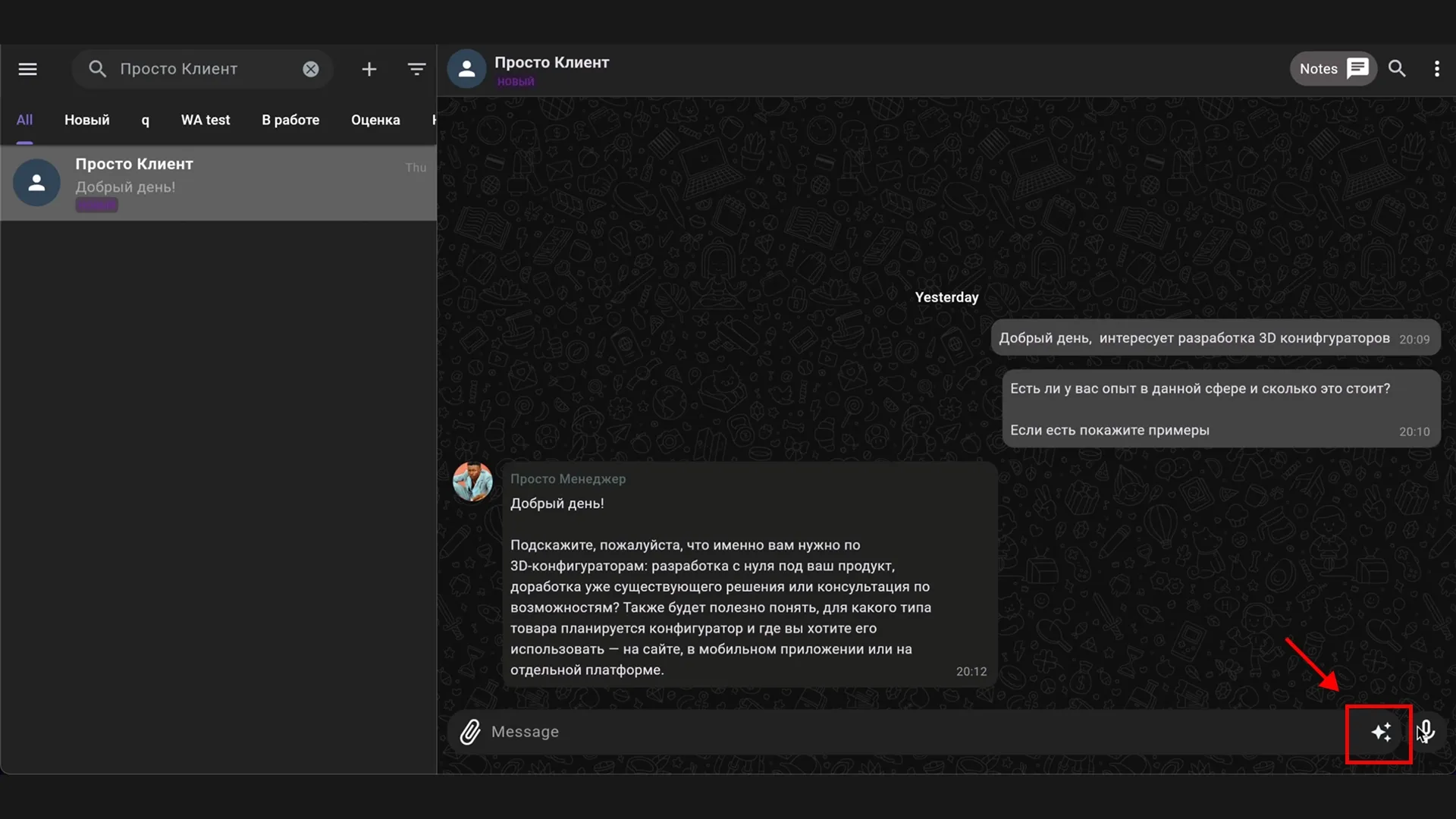
Then it is enough to say the task out loud, for example:
"Tell the client that we develop 3D configurators and add a link to our website."
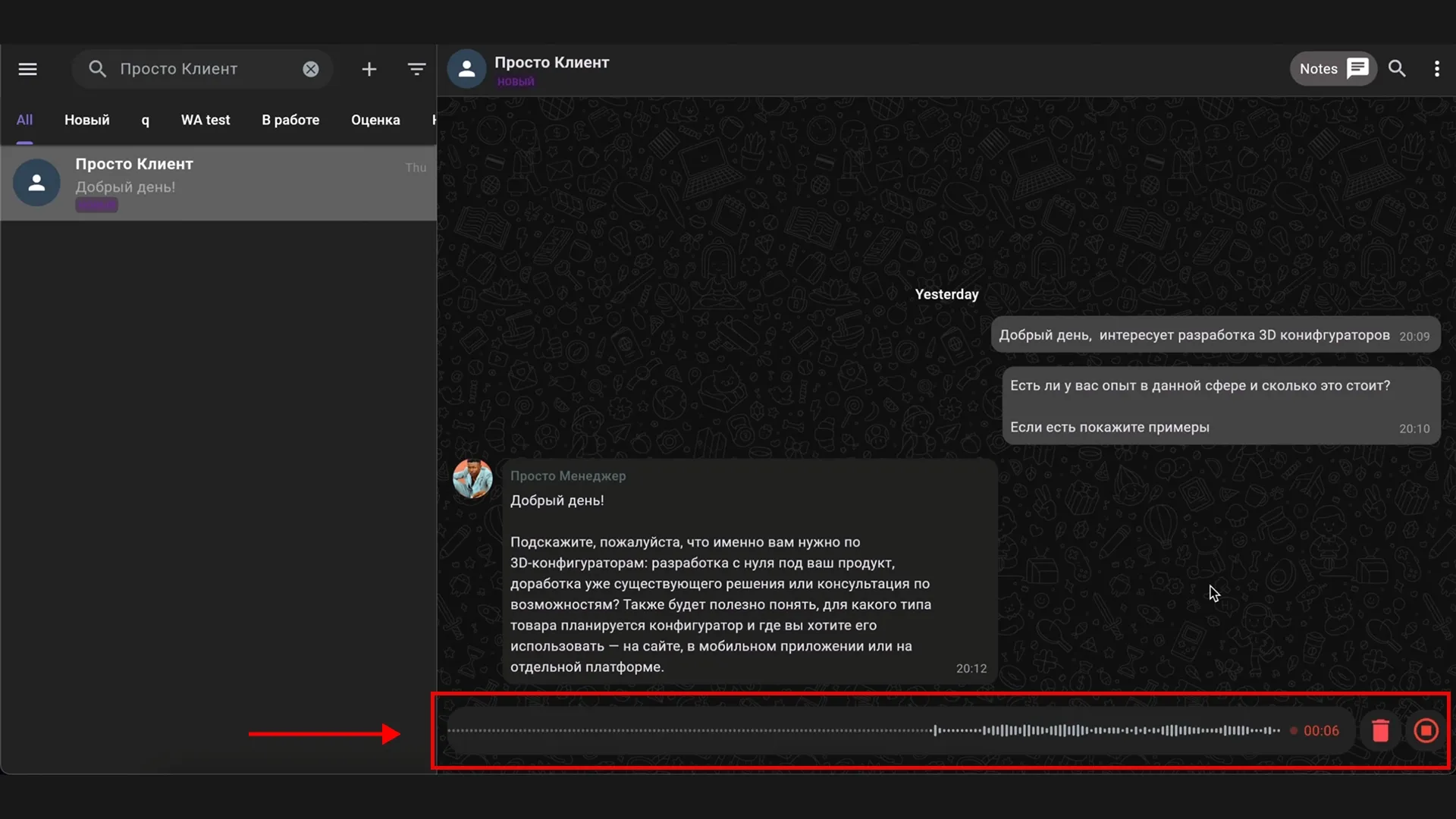
After this, the AI analyzes:
- current correspondence;
- client context;
- language of communication;
- internal company knowledge base;
- website and document data;
- message history.
Based on this information, the system automatically generates a complete response, which can be sent immediately or quickly edited if necessary.
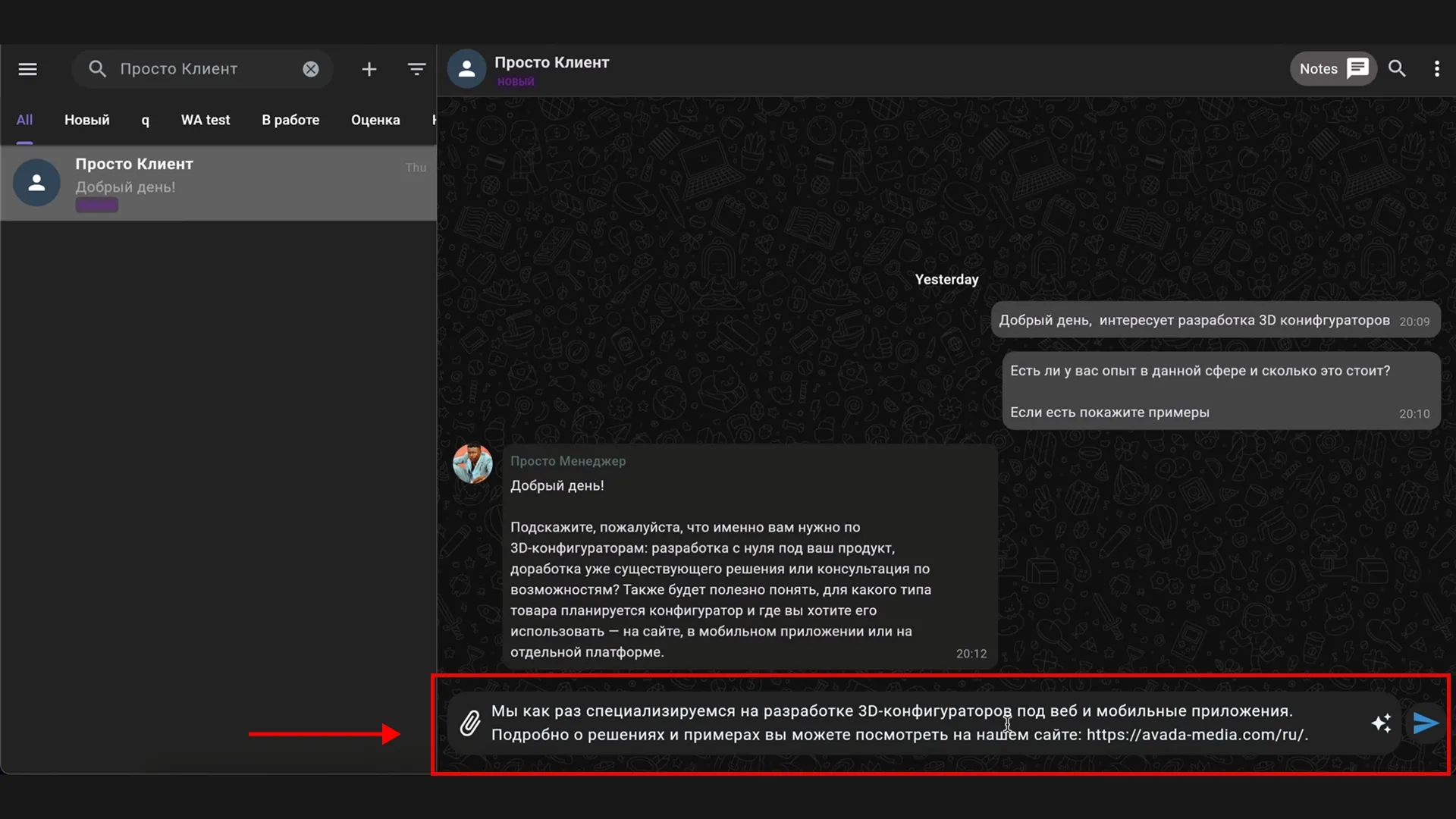
At the same time, AI is capable of:
- automatically correct errors;
- translate messages into other languages;
- change the style and format of the answer;
- add links to the website, portfolio and presentations;
- tailor messages to a specific client;
- use information from the company's internal documents through RAG mechanisms and AI Knowledge Base.
Why is this convenient?
The main advantage of such a system is significant time savings for managers and faster communication with clients.
In a classic CRM, an employee often has to:
- manually write the same type of messages;
- search for the necessary links;
- copy information from the website;
- check the text for errors;
- translate answers into other languages;
- spend time on formatting messages.
The AI assistant takes on much of this work. The manager essentially becomes an operator who assigns a task, and the system automatically generates a high-quality response.
This is especially convenient for companies where managers process dozens or hundreds of messages daily:
- IT companies;
- digital agencies;
- online stores;
- CRM/ERP platforms;
- construction companies;
- service businesses;
- logistics companies;
- sales and support departments.
Working with different languages
One of the key features of the AI assistant is its multilingual support. The system can understand voice commands and messages in Russian, Ukrainian, English, and other languages.
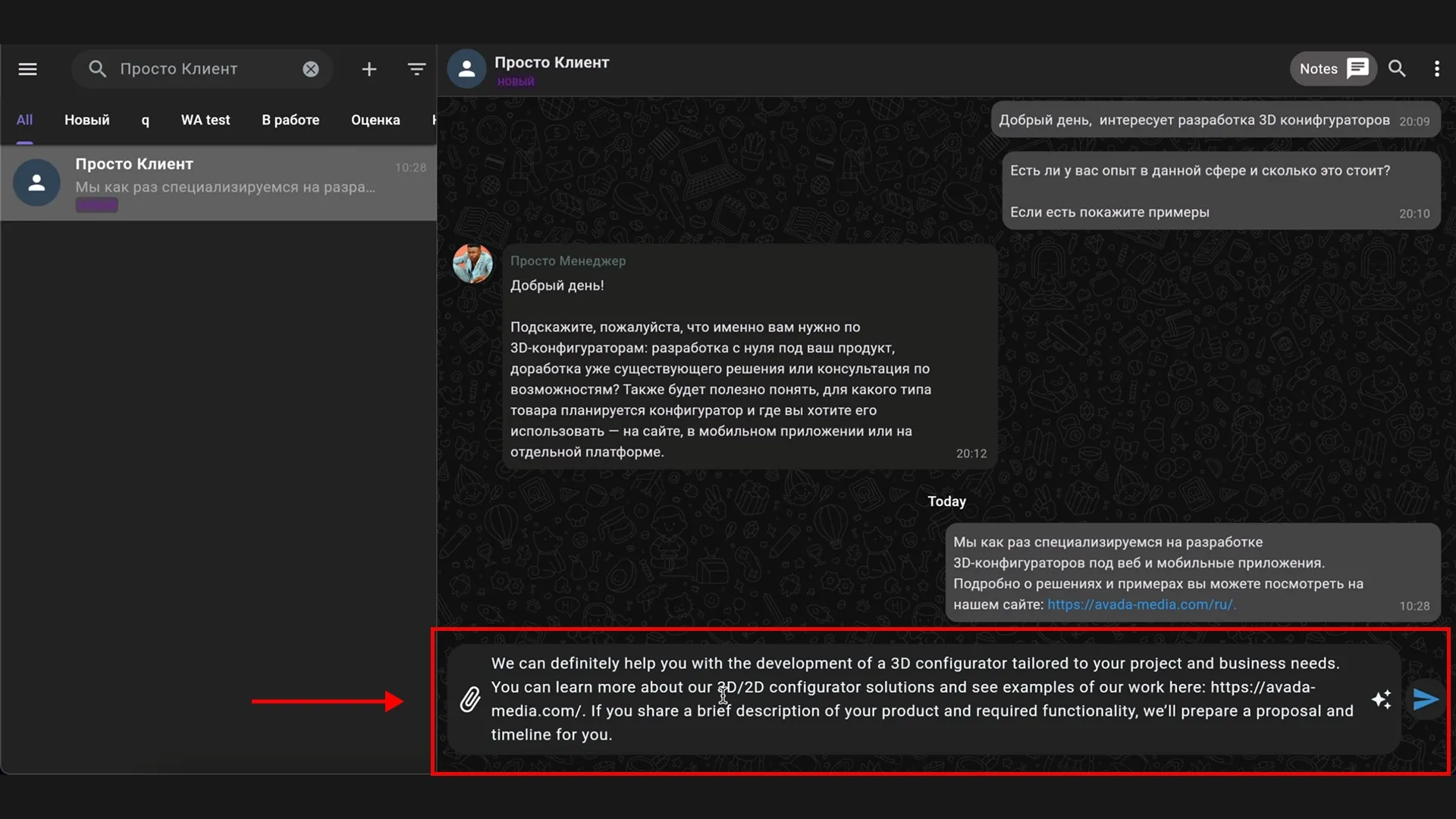
For example, a manager might ask in Russian:
"Reply to the client in English and include a link to the demo projects."
After this, the AI will independently generate the correct message in English, taking into account the context of the conversation.
This is especially useful for international companies working with foreign clients via Telegram, WhatsApp, LinkedIn, email, and built-in CRM chats.
Using the company's knowledge base
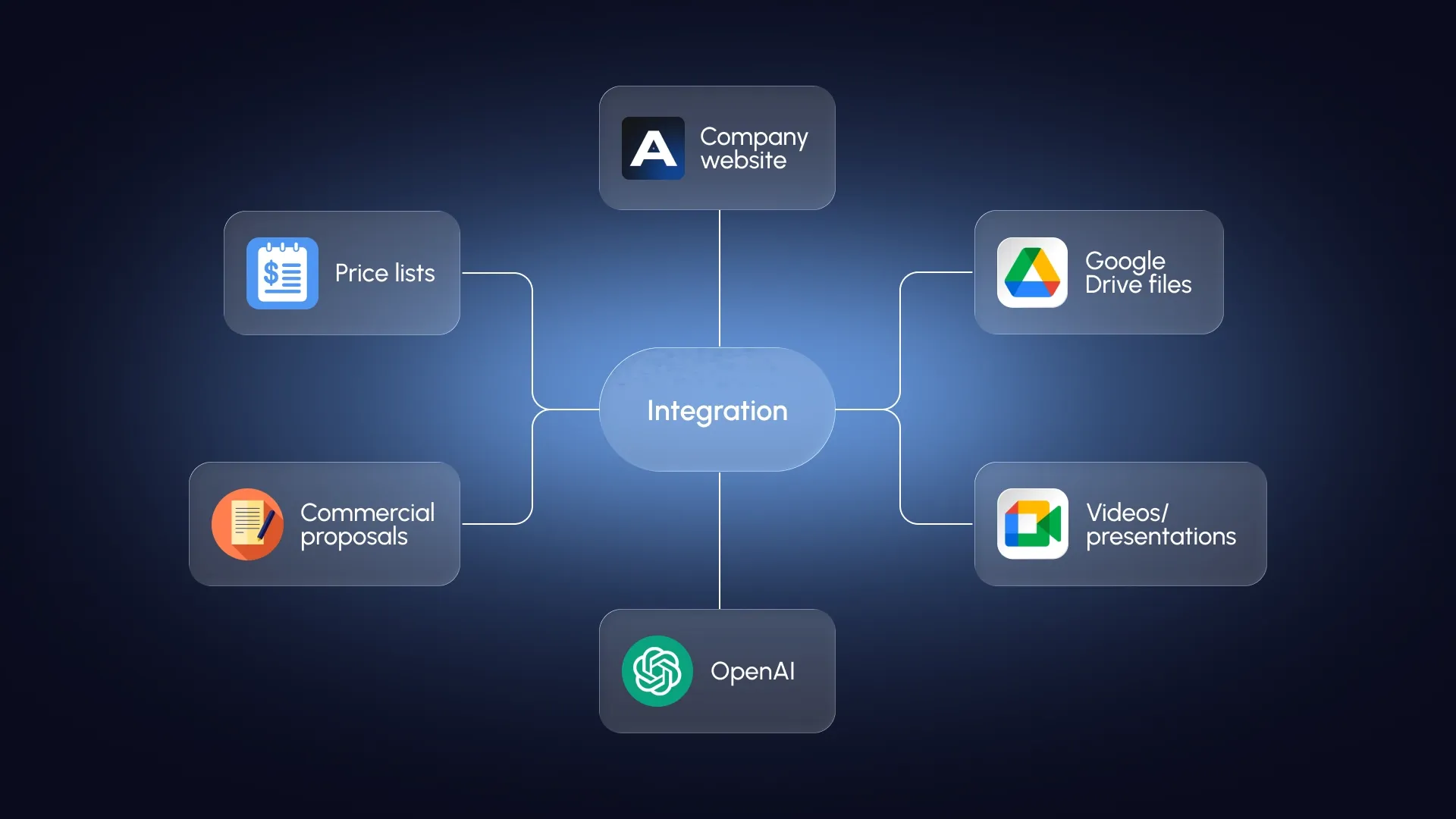
This function becomes most effective when integrated with the company's internal AI knowledge base.
In this case, AI gets access to:
- to the company website;
- internal instructions;
- commercial proposals;
- presentations;
- PDF documents;
- FAQ;
- description of services;
- case study and portfolio database.
This makes responses significantly more accurate and relevant. AI can automatically insert relevant links, accurately describe the company's services, and use the correct terminology.
Essentially, CRM begins to function as an intelligent AI assistant for the sales and customer service departments.
Where can I use this feature?
AI assistants for quick responses can be used in virtually any corporate system: CRM and ERP, customer chats, Telegram and WhatsApp, help desks, internal corporate portals, B2B sales, e-commerce, call centers, and next-generation AI-first CRM systems.
These features are also ideal for mobile CRM systems, where it can be particularly inconvenient for managers to type long messages manually.
Why are these AI features becoming a trend?
With the development of artificial intelligence, businesses are gradually moving from classic CRM systems to AI-native systems, where AI becomes a full-fledged participant in the work process.
While CRM previously simply stored customer information, it now begins to:
- help the manager answer;
- analyze correspondence;
- suggest next steps;
- automatically generate messages;
- search for information within the company;
- speed up communication and sales.
As a result, employees spend less time on routine tasks and can focus directly on working with clients and sales.
Conclusion
An AI assistant for quick responses in CRM is one of the most practical and in-demand AI features for modern businesses. It significantly speeds up communication with clients, reduces the workload on managers, and improves the quality of request processing.
These solutions are especially effective when combined with the company's internal knowledge base, voice commands, and multilingual support.
In essence, we are talking about the transition from conventional CRM systems to intelligent AI platforms that help employees work faster, more conveniently, and more efficiently.


